Body Condition Scoring Sheep and Goats: A Simple Tool for Better Breeding Decisions
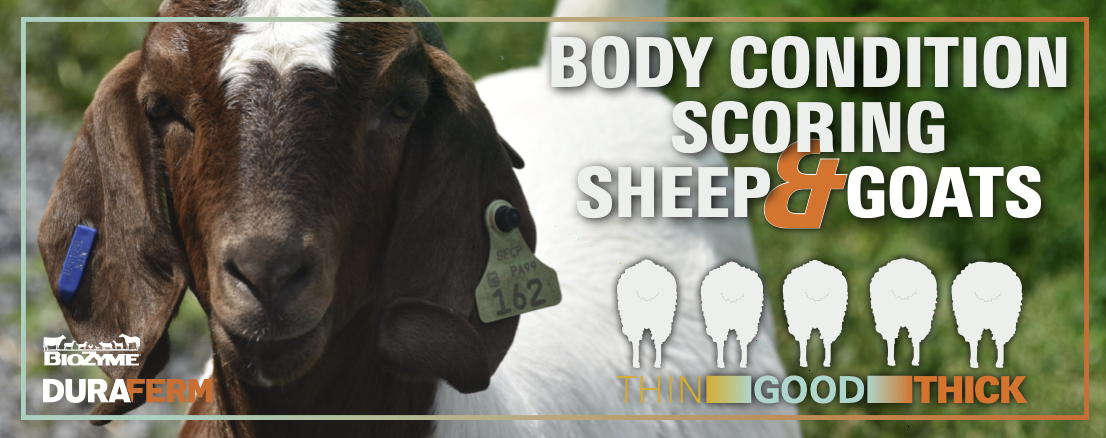
When breeding season is approaching, there is a lot to get done. Buck and ram health needs to be evaluated. Does and ewes need to be checked. Pastures need to be assessed, nutrition programs adjusted and breeding groups planned.
Somewhere in that list there should be a simple, hands-on management tool: body condition scoring sheep and goats.
Body condition scoring, or BCS, gives producers a way to evaluate if animals are carrying too little, too much or just the right amount of body fat and muscle for their current stage of the production cycle. Unlike body weight, which can vary considerably between breeds and individual animals, body condition scoring gives producers a practical way to evaluate nutritional status by putting their hands on the animal and feeling key areas of the body.
Body condition scoring sheep and goats matter because nutrition and reproduction are closely connected. An animal that enters breeding season in poor condition may not perform the same as one that has adequate energy reserves. On the other hand, more condition is not always better. The goal is not to make breeding females fat. The goal is to have them in the right condition at the right time.
What Is Body Condition Scoring?
Body condition scoring is a method of evaluating an animal's muscle and fat reserves using a numerical scale, generally from 1 to 5.
A score of 1 represents an extremely thin animal, while a score of 5 represents an extremely fat animal. Half scores, such as 2.5 or 3.5, can be used when an animal falls between categories.
The important part is that BCS is not simply a matter of looking at an animal.
Wool, hair and breed differences can make visual evaluation misleading. A sheep or goat may look reasonably well conditioned but feel much thinner once you put your hands on its back. Body condition scoring, especially in small ruminants, relies on feeling the amount of muscle and fat around the spine, loin and ribs.
With practice, scoring becomes a quick part of routine herd or flock checks.
And that is really where the value comes in. BCS is not just a number. It is information you can use to make better decisions about nutrition, breeding and overall management.
How Do You Body Condition Score a Sheep?
For a sheep body condition score, focus on the loin area behind the last rib and in front of the hip bone.
Run your hand along the backbone and feel the spinous processes, or the bony projections along the spine. Then feel for the transverse processes that extend out from the vertebrae. Pay attention to how much muscle and fat cover those bones.
You are looking for the following general differences:
- BCS 1: The spine and transverse processes are sharp and prominent. There is very little muscle or fat cover.
- BCS 2: The spine remains prominent, but there is more muscle and some fat cover. The transverse processes are smoother and slightly rounded.
- BCS 3: The spine is smooth and rounded and requires some pressure to feel individual bones. The loin is full and has moderate fat cover.
- BCS 4: The spine is difficult to feel without pressure. The transverse processes are generally difficult to locate because of increased muscle and fat cover.
- BCS 5: The spine and transverse processes are nearly impossible to feel because they are covered by substantial fat.
The exact distinction between scores takes practice. Don't get hung up on whether one ewe is a 3 or a 3.5. The bigger concern is identifying the ewe that is a 2 when the rest of the flock is around a 3.5.
That difference can help you identify animals that need a closer look at their nutrition or health.
How Do You Body Condition Score a Goat?
A goat body condition score is also based on a 1-to-5 scale, but producers should use more than one area of the body when evaluating goats.
Start around the lumbar region, feeling along the spine and transverse processes. Then evaluate the loin muscle and fat cover. The ribs, sternum and overall muscle development can provide additional information.
A goat at a BCS of 3 should have good loin and leg muscle development, with the spine and ribs not readily visible. The bones should still be easy enough to locate by touch without being sharp and prominent.
At the other end of the scale, a goat with a BCS of 1 will have prominent bones, little muscle and almost no fat cover. A BCS of 5 indicates excessive fat cover and obesity.
For most goats, a BCS around 3 is a good target, although acceptable condition can vary depending on the animal's stage of production. Pennsylvania State University Extension recommends evaluating goats throughout the year because body condition changes with production demands.
The more often you practice, the better you become at recognizing the differences.
What Is a Good Body Condition Score for Sheep?
For breeding ewes, a BCS around 3 to 3.5 is generally a good target.
Oregon State University Extension lists a breeding target of 3 to 4 for ewes, while other extension recommendations commonly target around 3 at breeding. The exact target can vary from flock to flock, production system and time of year.
The key is to avoid extremes.
Ewes that are too thin may have reduced reproductive performance. Research and extension guidance have connected body condition at breeding with ovulation rate and subsequent lambing performance. At the same time, excessively fat animals can also experience reproductive and lambing challenges.
Think of BCS as finding the porridge that is just right – not too hot, not too cold – just right!
What Is a Good Body Condition Score for Goats?
For does, a BCS of approximately 3 is a good breeding-season goal, with 2.5 to 3.5 generally considered an appropriate range in many management recommendations.
Again, the goal isn't maximum condition – it is optimum condition.
A doe needs adequate energy reserves to support reproduction, pregnancy and lactation, but carrying excessive condition does not automatically translate into better reproductive performance. In fact, overly fat does can face challenges during late pregnancy and kidding.
A consistent scoring program helps producers identify the does that need additional attention before breeding rather than discovering a problem after the buck has already been turned in.
Does Body Condition Impact Breeding?
Yes. Body condition and breeding in small ruminants – or any livestock, for that matter - are closely connected.
Reproduction requires energy. If a ewe or doe uses most of her available nutrients to simply maintain herself, there may not be enough nutritional support for optimal reproductive performance.
Thin females may have lower ovulation rates and poorer reproductive outcomes. Body condition around breeding has also been associated with embryo survival and the number of lambs or kids produced.
This is why checking condition shortly before breeding is too late for some animals.
If you find half your flock is thin when the ram goes in, you have already missed an opportunity to correct the problem gradually.
Can Thin Ewes Get Pregnant?
Yes, thin ewes can become pregnant. But pregnancy is not the only measure of a successful breeding season.
A ewe may conceive and still not perform as well as expected because of inadequate body reserves. Low body condition at breeding can be associated with lower ovulation, conception and lambing rates. Poor condition later in pregnancy can also impact lamb survival and weaning performance.
That is why the goal should be to enter breeding season with ewes already in appropriate condition rather than relying on them to catch up later.
Can Thin Goats Get Pregnant?
Thin does can also get bred, but that does not mean they are in an ideal nutritional position for reproduction.
A doe needs adequate energy and nutrients to support ovulation, conception, embryo survival and eventually milk production. If she is visibly thin or scores below the desired range, evaluate the reason before simply adding more feed.
Poor body condition can be related to inadequate nutrition, parasite pressure, dental problems, disease, competition at the feeder or other management issues.
In other words, BCS can raise a question that deserves an answer.
When Should You Body Condition Score Sheep and Goats?
Don't wait until breeding season.
Body condition scoring is most useful when it becomes part of the normal management calendar.
Important times to evaluate sheep and goats include:
After weaning:
This is a good time to evaluate females and determine which animals need to regain condition before the next breeding season.
Before breeding:
Ideally, evaluate females several weeks before breeding so there is time to make nutritional adjustments.
During pregnancy:
Condition should be monitored as nutritional requirements change.
Four to six weeks before lambing or kidding:
This is an especially important checkpoint because nutritional demands are increasing and there is still time to make adjustments.
After lambing or kidding:
Early lactation can quickly change body condition, especially in females raising multiples.
Making BCS part of routine handling also gives producers a chance to compare condition from one production cycle to the next.
How Does Nutrition Impact Reproduction in Sheep?
Nutrition for sheep and goat reproduction isn't simply about putting more feed in front of the animals.
It starts with understanding what the animals are receiving from pasture, hay, supplements and other feed sources, then matching that nutrition to their production stage.
For ewes, body condition can change throughout the year. Nutritional demands increase during late pregnancy and lactation, and those demands can pull down body reserves if the diet doesn't provide enough nutrients.
That is why ewes that look fine at weaning may not be in the same condition a few months later.
Feed quality matters, too. Good forage can provide a strong nutritional foundation, but forage quality and availability change with weather, maturity and grazing pressure. Forage testing can help producers make more informed decisions about when additional protein, energy, minerals or other nutritional support may be needed.
How Does Nutrition Impact Reproduction in Goats?
Goats are no different when it comes to the connection between nutrition and reproduction.
A good sheep and goat nutrition program for breeding should consider the animal's body condition, forage availability, stage of production and nutrient requirements. Goats also have a reputation for being selective eaters, which means what is available in the pasture isn't necessarily the same thing as what the goat actually consumes.
If does are losing condition, don't assume they simply need more hay. Look at the entire nutritional picture and consider other factors that could be affecting body condition.
Parasite pressure, health problems and competition can all influence whether a doe maintains condition.
DuraFerm Offers Nutritional Solutions
A complete vitamin and mineral program can help support the nutritional needs of sheep and goats throughout the production cycle or any time of year. DuraFerm® is a line of nutritional supplements for sheep and goats that supports optimal digestion and nutrition for maximized performance at every stage of production.
DuraFerm products are powered by AO-Biotics Amaferm, a research-proven prebiotic that increases digestibility and ensures that your animals get more nutrients from every bite. Additionally, DuraFerm products are specifically formulated for both sheep and goats, so you get the proper levels of organic trace minerals like zinc, manganese and selenium. The DuraFerm products also have boosted levels of Vitamin E for reproductive tract repair. Both species’ formulas provide a protein tub for increased protein when forage quality is low; otherwise, the product is a free-choice mineral.
What Is Flushing Sheep Before Breeding?
Flushing is a nutritional management strategy used to improve the nutritional status of ewes before and during breeding.
The idea is relatively simple: provide additional energy, often through improved pasture or supplemental feed, for a period leading into breeding. The goal is to support reproductive performance and, particularly in appropriately selected animals, increase ovulation rate.
Research-based extension recommendations commonly suggest beginning flushing several weeks before breeding and continuing through at least one estrous cycle. However, flushing isn't necessarily appropriate for every ewe. Overfeeding females that are already in good or excessive condition isn't the objective. In other words, look at the ewe before deciding how much nutritional help she needs.
What Is Flushing Goats Before Breeding?
Flushing goats follows the same basic concept.
Providing additional energy before breeding helps does that need to improve their BCS and may support reproductive performance. High-quality pasture or an appropriate energy supplement like the DuraFerm® Concept•Aid® Goat Protein Tub can be used depending on the production system.
But flushing should be part of a larger nutrition strategy, not a last-minute attempt to fix poor body condition. If a doe is a BCS 2 and breeding happens tomorrow, adding feed today isn't going to completely change the situation.
That is why body condition scoring sheep and goats should happen early enough to allow producers to make gradual nutritional changes.
How Do You Improve Body Condition Before Breeding?
Start by finding thin animals.
Once you have identified animals – female or male – that are below your desired BCS, determine why they are thin. Evaluate forage quality, feed intake, access to feed, parasite pressure, dental health and other potential health concerns. Then make a nutrition plan.
Thin animals may need additional energy and protein to regain condition, but the amount and type of supplementation should fit the rest of the diet and the animal's nutritional requirements.
Grouping animals by nutritional need can also make feed management more efficient. Instead of feeding every animal for the hungriest ewe in the flock, producers can target additional nutrition toward the animals that actually need it.
This is one of the practical benefits of body condition scoring. It turns a vague observation such as "they look a little thin" into information that can be used to make management decisions.
Don't Forget the Rams and Bucks
Breeding females get most of the attention, but males make up 50% of the equation, too.
Rams and bucks can lose significant weight during the breeding season because of increased activity and reduced time spent eating. They should enter breeding season in good condition and be monitored throughout the season.
A target around BCS 3 to 3.5 is commonly recommended for breeding males. The goal is to have them fit and ready to work, not excessively fat. A breeding soundness examination should also be part of pre-breeding preparation.
Good genetics won't matter much if the breeding animal isn't physically prepared to do the job.
Body Condition Scoring Is a Management Tool, Not a Number
There is no magic BCS number that guarantees a successful breeding season.
Body condition scoring works because it gives producers another piece of information. When combined with forage evaluation, nutrition records, health observations, reproductive records and good herd or flock management, it helps tell the story of what is happening inside the operation.
And it doesn't take expensive equipment. It takes your hands, a little practice and the willingness to check animals before a problem becomes a production loss. For sheep and goat producers preparing for breeding season, that may be one of the simplest tools available.
Feel the backbone. Check the loin. Evaluate the ribs. Know your numbers. Then make the nutritional adjustments your animals need.
Because when it comes to reproduction, getting the flock or herd in the right condition before breeding is far easier than trying to fix a problem after the breeding season has already started.
Frequently Asked Questions About Body Condition Scoring Sheep and Goats
What body condition score should ewes be at breeding?
A BCS around 3 to 3.5 is a common target for breeding ewes, although recommendations can vary from approximately 3 to 4 depending on the production system. Avoiding both very thin and excessively fat ewes is important.
What body condition score should does be at breeding?
A BCS of approximately 3 is generally a good target for does at breeding, with 2.5 to 3.5 often considered an appropriate range.
Does body condition impact breeding?
Yes. Body condition can influence reproductive performance, including ovulation, conception and embryo survival. Maintaining breeding females in appropriate condition is an important part of reproductive management.
How often should sheep and goats be body condition scored?
At minimum, evaluate condition around important production stages such as after weaning, before breeding and during late pregnancy. More frequent checks can help producers identify nutritional problems sooner.
Support Your Flock Before Breeding Season
Body condition is only one part of a successful breeding nutrition program. DuraFerm® supplements provide targeted nutritional support for sheep and goats and are powered by AO-Biotics® Amaferm® to help enhance digestibility.
Find a DuraFerm Dealer Shop DuraFerm Online Chewy Amazon
Don’t Forget the DuraFerm
Hopefully you realize how important supplementing vitamins and minerals is to prepare your flock or herd’s condition before breeding. DuraFerm can help, powered by AO-Biotics Amaferm, this not only provides the vitamins and minerals your flock needs to thrive, the Amaferm ensures the sheep and goats get the most nutritional value from every bite of feed and forage.
DuraFerm products are available through the extensive BioZyme dealer network. Locate a dealer near you today. You can also shop online.
Sign up for our newsletter to stay informed about best practices for seasonal small ruminant nutrition and management.