Fetal Development in Beef Cattle: Gestation Stages, Nutrition and Fetal Programming
Updated: October, 12, 2026
One of the most rewarding days of the year for cow-calf producers is sale day. However, watching a calf crop grow from calving to weaning brings many challenges. Braving the blowing snow to save a newborn calf from the ice and cold can test anyone’s dedication. Waiting it out at 2 a.m. while a former show cow delivers her ninth healthy calf can cost you some sleep. Nevertheless, those challenges seem to fade when those healthy calves come through the processing chute at weaning. You know the work was worth it, especially when those calves perform well and bring a premium on sale day.
Before those calves ever hit the ground, a lot has already happened.
The growth and development taking place inside the uterus helps set the stage for what happens after birth. From the earliest days following conception through the final weeks before calving, the developing calf is changing rapidly. Understanding the stages of fetal development in cattle can help cow-calf producers make better decisions about nutrition and management throughout pregnancy.
And it is important to remember that fetal development is not just a third-trimester conversation.
What Are the Stages of Fetal Development in Cattle?
Fetal development in beef cattle occurs throughout pregnancy and can generally be considered in three broad stages: early gestation, mid-gestation and late gestation. Early pregnancy involves establishment of the pregnancy, placental development and organ formation. Mid-gestation brings continued development of tissues and organs, while late gestation is characterized by rapid fetal growth and preparation for birth.
On average, cattle gestation lasts about 283 days, although actual gestation length can vary among individual cows, breeds, calf gender and other factors. Therefore, there are nearly nine months of development taking place before a calf ever takes its first breath.
The Importance of Early Gestation
Following fertilization, cell division begins almost immediately. Within the first few days, the developing embryo continues dividing as it travels through the reproductive tract toward the uterus. Around days 15 to 17, maternal recognition of pregnancy occurs, followed by attachment of the developing placenta around days 19 to 22.
This is a busy time for something that is still incredibly small.
Around day 25, limbs and several major organs begin developing, including the liver, pancreas, lungs, thyroid, brain and kidneys. Development of the reproductive system follows, with the testicles beginning to develop in male fetuses around day 45 and ovarian development occurring somewhat later in females. The digestive system also begins developing during this early period.
The first 50 days of gestation are particularly important. Research indicates that the periconceptual and early pregnancy period is important not only for establishing pregnancy, but also for programming placental and fetal development.
That is an important reminder for producers: Just because the fetus is small does not mean important development isn't happening.
When Does a Calf Develop a Heartbeat?
A fetal heartbeat can be established at approximately 20 to 22 days after conception in cattle.
That means a remarkable amount of development has already occurred within the first month of pregnancy. The embryo has gone from a handful of dividing cells to a developing fetus with a functioning heart and the beginnings of major organ systems.
When Do Organs Develop in a Fetal Calf?
Major organ development begins very early in pregnancy, with several organs beginning to form around the first 25 days. By approximately 45 to 50 days of gestation, many of the major organ systems have been established, although continued growth and maturation occur throughout the rest of pregnancy and after birth.
The important distinction is that development does not stop once an organ is formed.
The organs, tissues and systems continue to grow and mature as pregnancy progresses. That means nutrition and the maternal environment can matter at different points in different ways.
Mid-Gestation: Development Continues
Mid-gestation is sometimes overlooked because the dramatic increase in fetal weight hasn’t happened yet. But there is still plenty happening inside the cow. The developing calf continues to build bone, muscle and other tissues. Organs continue to mature, the placenta continues to support the pregnancy, and the foundation for future growth is being established.
This is also when maternal nutrition and fetal programming deserve attention. The fetus starts responding to its environment. Maternal nutrition, health, age, physiological status and environmental conditions can all influence how the developing calf grows and develops.
Research in beef cattle has shown that maternal nutrition can influence placental development, fetal tissues and later offspring performance. The effects can depend on the timing and severity of nutritional changes, as well as other factors such as genetics and the sex of the calf.
Third Trimester: The Growth Spurt
Although fetal development occurs throughout gestation, the greatest amount of fetal weight gain occurs during the third and final trimester. More than 75% of fetal growth and weight gain happens during this period.
The nutritional demands of pregnancy really begin to show during this time, second only to lactation. As the calf grows rapidly, it requires more nutrients. At the same time, the cow still has her own maintenance requirements and she is preparing for the demands of lactation. The cow is carrying two nutritional responsibilities: maintaining herself and supporting the calf developing inside her.
The Importance of the Third Trimester to Your Cattle Herd
The third trimester is important because fetal growth accelerates rapidly while the cow’s nutritional requirements increase. During this period, the calf continues developing its organs and tissues while preparing for life outside the uterus.
The lungs continue to mature, and brown fat is deposited late in gestation. Brown fat is important for helping the newborn calf generate heat after birth.
For the cow, this period can also be challenging. If her diet does not provide enough nutrients, she can begin using her own body reserves to help meet the demands of pregnancy and, eventually, lactation. This is especially important for young females.
A first-calf heifer is still growing herself while carrying a growing fetus. Her nutritional requirements are different from a mature cow because she has to support her own growth and maintenance in addition to pregnancy.
Chris Cassady, Ph.D., BioZyme® Inc. Director of Technical Sales & Research, explains, “A young pregnant female that is still growing needs more protein than a mature cow. If there aren't enough nutrients for the heifer and her growing fetus, she will use what is available first to meet her own growth and maintenance needs.”
The takeaway is simple: Know what the cow needs and understand how those requirements change throughout pregnancy.
How Does Maternal Nutrition Affect Fetal Development?
Maternal nutrition provides the nutrients needed for placental function, fetal growth and tissue development. Both inadequate and excessive nutrition can influence fetal development, which makes meeting the cow’s requirements, rather than simply feeding more, the goal.
Energy and protein are often the first nutrients producers consider, and for good reason. They are common limiting nutrients in beef cattle diets. But vitamins and minerals are important, too.
Minerals are involved in many of the body's fundamental processes, including bone formation, enzyme function, hormone development and immune function. Trace minerals such as zinc, selenium, copper and manganese play important roles in reproduction and development. Research continues to expand our understanding of how maternal micronutrient status can influence fetal development and developmental programming in cattle.
That is why a year-round nutrition program is vital to the herd, and nutrition should not be viewed as something that only matters when forage quality falls or the cow gets close to calving.
What Are Important Nutrients for Pregnant Beef Cattle?
Energy, protein, vitamins and minerals all have a role in supporting a pregnant beef cow and her developing calf.
Energy supports maintenance, pregnancy and, later, lactation. As fetal growth accelerates, the cow’s energy requirements increase.
Protein provides amino acids needed for tissue development and maintenance. Adequate dietary protein becomes especially important in the cattle diet when forage quality declines or when the cow’s requirements increase.
Vitamins and minerals support everything from skeletal development and enzyme function to reproduction and immune response. A balanced mineral program helps ensure cows have access to nutrients they need when those nutrients are required.
“All nutrients play a pivotal role in fetal growth and development, but it’s a matter of providing enough of the ‘right’ ones at the ‘right’ time,” Cassady said.
Good cattle nutrition isn’t simply about putting feed in front of a cow. It is about matching the nutrition program to the animal, the forage and the stage of production.
Fetal Programming in Beef Cattle Explained
Fetal programming in beef cattle describes how the maternal environment during pregnancy can influence the development and future function of the calf. Maternal nutrition, health and other environmental factors can affect developing tissues and may have consequences for offspring growth, health, reproduction and productivity after birth.
Fetal programming has become an important area of research in beef production because development doesn't necessarily stop being important when the calf is born.
Nutrition impacts fetal programming in fetal and placental development and potentially impacts offspring outcomes later in life. The cow provides more than nutrients for the calf to grow. She provides the environment in which that calf develops.
That doesn't mean a producer can feed a specific ingredient during pregnancy and guarantee a specific outcome at weaning or harvest. Fetal programming is complex, and outcomes depend on timing, nutrient status, genetics, environment and post-natal management.
The Impact of Poor Cow Nutrition on Calf Performance After Birth
Maternal nutrition during pregnancy does influence offspring growth, body composition, health and reproductive development of the calf after birth.
One example is research evaluating protein supplementation during the third trimester. Cows receiving additional protein produced male offspring with greater muscle development and heavier weaning weights in that study. Female offspring from supplemented cows also reached puberty earlier. Not every nutritional program will produce the same result. Instead, they demonstrate why researchers continue to study the connection between maternal nutrition and offspring performance.
How Does Fetal Development Impact the Cow?
Fetal development doesn't happen in isolation. It happens inside a cow that has her own nutritional requirements, production demands and environmental challenges.
During early gestation, the nutrient requirements associated directly with fetal growth are relatively small. As pregnancy progresses and fetal growth accelerates, those requirements increase.
“If the cow’s not getting enough and mobilizing everything she has stored, the calf may seem to come out prepared biologically, but now the cow suffers. She's thinner, so dystocia can happen, poor colostrum quality tied with less calf vigor from thin cows means less passive transfer of immunity, and she likely won't breed back soon enough...the cycle will always continue,” Cassady said. “It's not just something that could be detrimental this year, can negatively impact the cow in subsequent years, too.”
Once the cow enters lactation, her nutrient requirements rise again as she begins producing milk for the newborn calf.
That means producers should consider the nutritional program as a continuous process rather than a series of disconnected feeding decisions. For a mature cow, the focus is primarily on maintaining body condition while supporting pregnancy and preparing for lactation. For a first-calf heifer, the equation is more complicated because she is still growing herself.
When Should Cows Receive Mineral Supplement?
Mineral supplementation should be part of a year-round nutrition program, with the specific supplement and intake matched to the cow’s stage of production, forage and nutrient requirements. Pregnancy doesn't suddenly make minerals important during the third trimester. They are important throughout the production cycle.
The specific mineral needs of a herd depend on many factors, including forage quality, geography, soil and forage mineral concentrations, animal class and stage of production. That is why working with a nutritionist or evaluating the complete diet is important when developing a mineral program.
For pregnant cows, the goal is to provide the nutrients they need when they need them.
Understanding the Cattle Gestation Timeline
Knowing where the cow is in her gestation can help producers understand what is happening inside her and what nutritional demands are coming next.
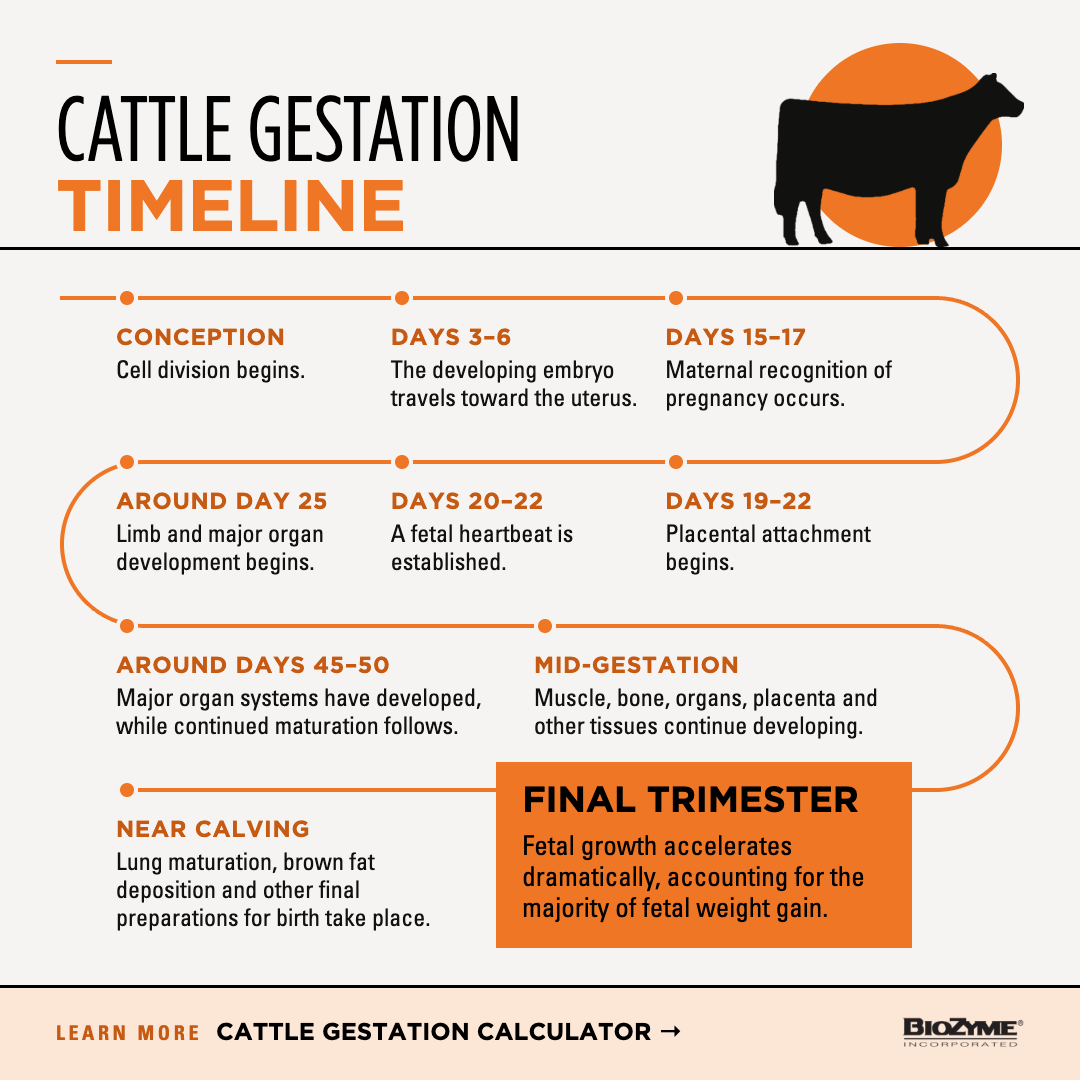
If you know your cows’ breeding dates, knowing their approximate calving dates can help you plan for these changing nutritional requirements.
Building a Nutrition Program for Every Stage of Pregnancy
Fetal development in beef cattle is a long process, and nutrition should be part of the conversation from the beginning. That doesn’t mean every cow needs the same feed program for all 283 days of pregnancy. In fact, the opposite is true. Nutritional needs change as the cow moves through gestation. Forage quality changes. Weather changes. Body condition changes. And the cow herself changes.
That is why evaluating forage and body condition and understanding the nutrient requirements of the cow are so important. As forage quality declines, supplemental protein can help fill nutritional gaps. As cows move into late gestation, increased fetal growth raises nutrient requirements. And as calving approaches, the cow is preparing for another major nutritional demand: lactation.
Give the Next Calf a Nutritional Advantage
Fetal development is about much more than getting a live calf on the ground. It is about supporting the cow throughout pregnancy and giving the developing calf the nutrients it needs during each stage of development.
At BioZyme, we believe nutrition should work with the animal, not simply be added to the ration. That's why VitaFerm® nutritional supplements are designed to help beef producers maximize energy and forage utilization while providing important vitamins and minerals.
VitaFerm® Concept•Aid® products are formulated to support cattle during key periods of the reproductive cycle and are available in formulations designed for different forage types and nutritional needs. Concept•Aid products are designed to be fed 60 days pre-calving through 60 days post-breeding, helping producers build nutrition into their reproductive management program.
In addition to Concept•Aid, BioZyme offers producers two other product lines to choose the option that best fits their management scenario:
- VitaFerm® ReproMaxx® products provide high vitamin and mineral fortification and research-proven components to take reproductive success to the MAXX.
- VitaFerm® ONE products provide one solution to conveniently and consistently promote cattle performance in all seasons.
All VitaFerm products include AO-Biotics® Amaferm®, a research-proven prebiotic produced through BioZyme’s proprietary fermentation process. Amaferm has been extensively researched for its ability to enhance digestibility and support the microbes that help cattle utilize their diets.
The right product will depend on your forage, cattle, management system and nutritional needs. Therefore BioZyme offers multiple VitaFerm formulations in each product line, including tub and protein options. Because we know every operation is different.
Get your VitaFerm Today
VitaFerm products, including Concept•Aid, are available through BioZyme dealers across the United States.
VitaFerm products are also available online.
Want to continue receiving valuable information about caring for your cow-calf operation? Sign up for our monthly newsletter for information designed to help you keep your herd healthy and get the best return on your investment.