How Cold Can Cows Tolerate? Understanding Cold Stress in Cattle
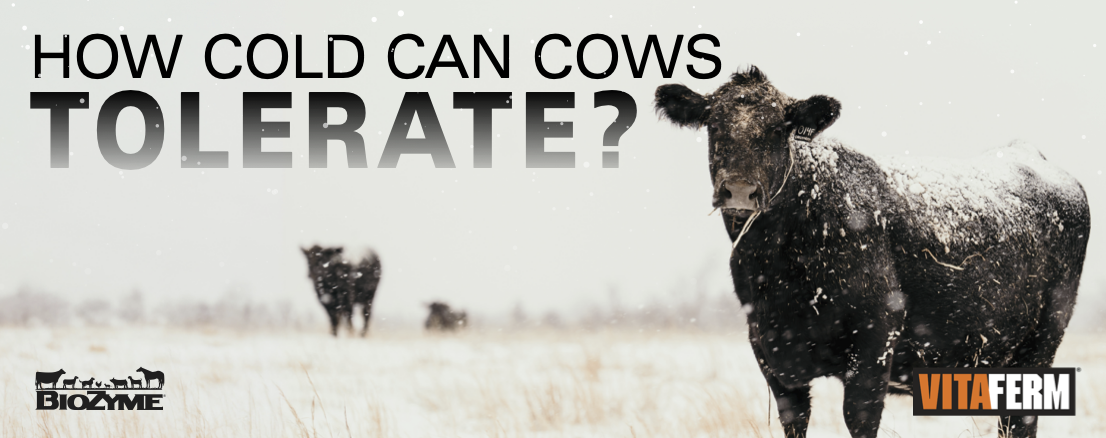
As livestock producers, we have plenty to think about. Input costs, breeding decisions, and market prices are all part of managing a successful operation. Weather is another factor that can impact cattle health, nutrition, and performance, especially as temperatures drop and winter settles in. Cattle are hardy animals, and most healthy, acclimated beef cows can tolerate cold weather surprisingly well. But just because cattle can survive freezing temperatures doesn’t mean cold weather has no effect on their nutritional needs or performance.
So, how cold can cows tolerate? The answer depends on several factors, including hair coat, body condition, wind, moisture, age and nutrition. Understanding these factors can help producers prepare their herds for winter and make informed feeding and management decisions.
The BioZyme® team includes cattle producers who understand the challenges of managing cattle through changing seasons. As a brand focused on beef cattle nutrition, VitaFerm® is committed to helping producers make the most of their forage, support animal health, and maintain performance year-round.
How Cold Can Cows Tolerate?
Cattle can tolerate cold temperatures well when they are healthy, acclimated and properly nourished. However, their nutritional requirements begin to change when temperatures fall below their lower critical temperature (LCT).
For cattle with a full winter hair coat, the lower critical temperature is often estimated at around 18 degrees Fahrenheit. Below that point, cattle must use more energy to maintain their body temperature. The threshold can be considerably higher for cattle with wet or summer coats, and wind and other environmental conditions also influence cold stress.
“So, will they survive? Yes. But will it potentially cause metabolic changes and stressors? Also, yes. While they can survive harsh cold, what we can’t see internally is what we need to focus on,” said Chris Cassady, Ph.D., BioZyme Director of Technical Sales & Research.
Beef cattle may tolerate temperatures below zero, particularly when they have a thick winter coat, adequate body condition, sufficient feed and protection from wind and moisture. However, there is no single temperature that determines when every cow will experience cold stress.
What Factors Affect Cold Tolerance in Cattle?
Cold tolerance in beef cattle depends on a combination of physiological, genetic, environmental, and management factors. Knowing what influences an animal’s ability to stay warm can help producers identify vulnerable cattle and adjust before winter weather affects performance.
Genetics and Breed
Some cattle breeds are better adapted to cold climates than others. Angus and Hereford cattle, for example, generally develop substantial winter coats, while cattle with shorter, thinner coats may be less insulated in cold conditions. Highland cattle are another example of a breed adapted to colder environments.
Acclimation also matters. Cattle accustomed to colder climates may develop thicker winter coats than cattle raised in warmer regions, even within the same breed.
Body Condition and Fat Reserves
Body condition influences how well cattle withstand cold weather. Adequate fat reserves provide insulation and energy that cattle can draw on when temperatures drop.
Producers should monitor body condition throughout the year, paying particular attention to cows approaching calving. A body condition score (BCS) of 5 to 6 on the 1-to-9 beef cattle scale is generally a useful target at calving, depending on the operation and production goals.
Thin cows have fewer energy reserves to support thermoregulation, making them more vulnerable when cold weather increases their nutritional demands. Maintaining appropriate body condition before winter arrives is an important part of cold-weather preparation.
Hair Coat
A thick, dry winter coat traps air near the skin and provides insulation. As temperatures decrease, cattle naturally grow longer, thicker hair to help protect themselves from the cold.
However, moisture can compromise heat protection. A wet or muddy hair coat provides less insulation than a dry one, allowing cattle to lose body heat more quickly. Wind can further increase heat loss.
Environmental Conditions and Shelter
Temperature is only part of the equation. Wind, rain, snow, humidity and ground conditions all influence cold stress.
Windbreaks, tree rows and properly managed shelters can help cattle escape harsh winds. Dry bedding provides insulation from cold, wet ground, especially for cows nearing calving and newborn calves. Shelters should also provide adequate ventilation. Reducing wind exposure is important, but trapping excessive moisture inside a poorly ventilated building can create additional challenges.
Age, Size and Health
Newborn calves are especially vulnerable to cold stress because they have a high surface-area-to-body-mass ratio, limited energy reserves, and less developed insulation than mature cattle. Older or sick cattle may also struggle to maintain body temperature.
Health status matters because illness can increase nutritional demands and reduce an animal’s ability to cope with environmental stress.
“Adding cold stress on top of an already nutrition-taxing immune system makes it harder for the calf to recover from disease as well,” Cassady said.
Producers should pay particular attention to calves, thin cows and animals recovering from illness during periods of severe winter weather.
How Cold Weather Affects Cattle Nutrition
Cold weather changes how cattle use the nutrients they consume. When temperatures fall below an animal’s lower critical temperature, more dietary energy is directed toward maintaining body temperature rather than supporting growth, reproduction or other production functions.
“Basically, once the animal falls below her lower critical temperature, she’s going to start putting energy toward thermoregulating herself,” Cassady said. “If she’s in survival mode instead of production mode, we lose opportunity revenue.”
That makes winter nutrition an important management consideration. Cattle may need additional energy to maintain body condition and performance, particularly when forage quality is limited or environmental conditions are severe.
Why Forage Quality Matters
Increasing access to quality forage is one strategy for helping cattle meet their energy demands during cold weather. The fermentation process in the rumen generates heat, and greater feed intake can help support the animal’s energy needs.
However, forage quality and digestibility influence how much usable energy cattle can obtain from their diets. Low-quality forage can limit intake because cattle physically fill up before consuming enough nutrients to meet their requirements.
That is where rumen function becomes an important part of winter nutrition.
AO-Biotics® Amaferm® is a research-proven prebiotic included in VitaFerm vitamin and mineral supplements. Amaferm works by stimulating the growth of beneficial rumen bacteria and fungi and supporting enzymatic activity, helping cattle make better use of the forage they consume.
Research has demonstrated increases in fiber digestibility and volatile fatty acid (VFA) production of 17% and 16%, respectively. VFAs are important energy sources produced through rumen fermentation.
By supporting forage digestion and energy availability, Amaferm helps producers get more value from their existing feed resources.
Balancing Energy and Protein Needs
When cold weather increases energy requirements, producers may need to adjust their feeding programs. Depending on forage quality, cattle condition and the severity of the weather, strategies may include increasing access to quality hay or providing an appropriate energy supplement.
Any changes to grain or concentrate feeding should be introduced carefully, with attention to rumen health and proper diet formulation.
Protein also plays an important role in cattle nutrition. According to Cassady, BioZyme research indicates that cattle fed Amaferm create an additional 143 grams of microbial protein per day. This microbial protein contributes to the animal’s supply of usable protein, helping support nutrient utilization.
The appropriate winter-feeding strategy will depend on the herd’s forage supply, nutritional status, stage of production and management goals. Evaluating forage and working with a nutritionist can help producers identify deficiencies and determine where supplementation will provide the greatest benefit.
How Cold Is Too Cold for Newborn Calves?
Newborn calves are more susceptible to cold stress than mature cattle. Their small size, wet hair coat, limited energy reserves and inability to generate and retain heat as efficiently make the first hours and days of life particularly important during winter.
A newborn calf can become chilled even when temperatures are not extremely low, especially when wind, precipitation and wet ground are involved. A calf born during a cold, wet storm faces different challenges than one born in dry conditions with protection from the wind.
Producers should watch for signs that a calf is struggling to stay warm, including shivering, weakness, lethargy, difficulty standing or nursing, and a weak suckle reflex. A severely chilled calf may stop shivering as its condition worsens, so the absence of shivering does not necessarily mean the calf is recovering.
Supporting Calves During Cold Weather
Good calving management begins before the first calf arrives. Maintaining appropriate cow body condition, providing adequate nutrition and preparing a clean, dry calving area can help support both the cow and calf.
After birth, calves should be monitored to ensure they are breathing normally, dry off promptly and receive colostrum as soon as possible. Colostrum provides essential antibodies and nutrients that help support the newborn calf’s early health. When conditions are severe, access to wind protection and dry bedding can make a meaningful difference. Producers should check newborns frequently and intervene when calves show signs of cold stress or fail to nurse.
For severely chilled or weak calves, prompt veterinary guidance is important. Warming and feeding protocols should be appropriate for the calf’s condition, particularly when the calf cannot swallow normally.
Cold Weather Calving: Prepare Before Temperatures Drop
Winter calving adds another layer of management to an already demanding season. Cold temperatures, mud, snow and wind can make it harder to monitor cows, care for newborns and maintain comfortable calving areas.
Preparation can help reduce some of those challenges. Before calving begins, review body condition scores, evaluate the herd’s nutritional program, check windbreaks and shelters, and make sure clean, dry bedding is available. Nutrition remains central to the plan. Cows need adequate nutrients to maintain body condition, support late gestation and produce colostrum and milk after calving. Requirements vary with the cow’s size, condition, stage of production, weather and forage supply.
Producers should also have a plan for assisting calves that need additional attention immediately after birth. Include a product like VitaFerm® Sure Start Gel in your calving tool kit, regardless of the season or the weather. Sure Start Gel is a gel specifically formulated for calves designed to support immune function and overall health during the critical post-birth period. The single-dose tube contains Amaferm, a prebiotic research-proven to support digestibility by stimulating beneficial microbes. It also delivers IgY antibodies derived from Salmonella, E. coli, bovine rotavirus, bovine coronavirus, Cryptosporidium, and Clostridium and MOS for broad support of the immune system. Sure Start provides nutritional support to maximize calf vigor.
Having the appropriate supplies available before calving season begins can help producers respond efficiently when a calf needs extra support.
VitaFerm Can Help Support Cattle Through Winter
Cold-weather nutrition is about more than providing additional feed. Producers need to consider forage quality, mineral and vitamin requirements, body condition and how effectively cattle digest their diets.
VitaFerm offers a range of vitamin and mineral supplements designed to support beef cattle nutrition throughout the production cycle. All VitaFerm products contain AO-Biotics Amaferm to support digestibility, helping cattle make better use of available forage.
VitaFerm® ONE
VitaFerm ONE offers a convenient option for producers seeking consistent vitamin and mineral supplementation throughout the year. The line includes loose mineral and tub options, with formulas designed to meet or exceed nutrient requirements throughout the production cycle.
Additional formulas offer specialized features to address different management needs, including options designed to help control anaplasmosis, manage flies or incorporate HEAT® technology.
VitaFerm® Concept•Aid®
VitaFerm Concept•Aid products are designed to support reproductive success when fed as part of a program beginning 60 days before calving and continuing through 60 days after breeding.
The line includes Amaferm and selected nutrients, including organic trace minerals and vitamin E, to support the nutritional needs of breeding cattle. Different formulas offer options for a variety of management situations, including products with additional features to address specific needs, including heat stress, fly control and more.
VitaFerm® ReproMaxx™
VitaFerm ReproMaxx is a premium free-choice vitamin and mineral supplement formulated to support reproductive success in beef cattle. It combines Amaferm with research-proven levels of Zinpro® organic zinc, copper and manganese.
The formula also supports nutritional programs focused on colostrum quality, bull soundness and fertility.
Each operation has different nutritional needs, so producers should select a supplement based on their forage program, herd requirements and management goals.
Help Your Herd Face Winter With Confidence
So, how cold can cows tolerate? Healthy, acclimated beef cattle can withstand very cold conditions, but their ability to do so depends on much more than the thermometer. Hair coat, body condition, wind, moisture, health and nutrition all influence cold tolerance.
The best approach is to prepare before winter weather arrives. Maintain appropriate body condition, provide protection from wind and moisture, monitor newborn calves and make sure cattle receive the nutrients they need when cold temperatures increase energy demands.
VitaFerm supplements, powered by Amaferm, offer producers a nutritional tool to support forage digestibility and nutrient utilization throughout the year.
At BioZyme, our commitment to care that comes full circle means helping producers make informed decisions that support animal health, production goals and business success.
Connect with your authorized BioZyme dealer to discuss your herd’s winter nutrition program and find the VitaFerm supplement that fits your operation.