When Should You Start Feeding a Cattle Protein Supplement?
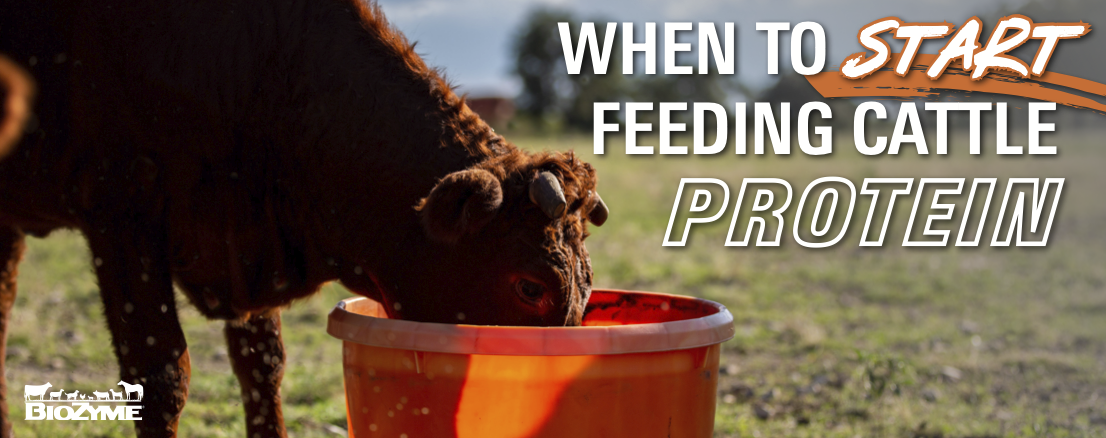
Many cow-calf producers would tell you that the cattle are simply a by-product of the land they graze, and the pasture is the foundation of their operation. The goal is simple: allow cattle to harvest as much nutrition as possible from available forage while maintaining body condition, reproductive performance, and herd health. But even the best pastures have a changing nutritional calendar.
Green grass doesn’t stay green forever.
As plants mature, weather conditions change, and growing conditions slow; forage quality begins to decline. The same pasture that supported excellent cattle performance earlier in the season may no longer provide the nutrients cattle need to maintain production. One of the first nutrients that often becomes limited is protein.
Knowing when forage quality has dropped enough to require supplementation is an important management decision. Starting a cattle protein supplement at the right time can help cattle better utilize available forage, support rumen function, maintain body condition, and prepare cows for the next stage of production.
The key is recognizing the signs before cattle lose valuable condition.
Cattle Nutrition Experts
VitaFerm® is an established brand of vitamin and mineral supplements designed to maximize energy and forage utilization for successful beef production. Our products support cattle producers looking to maximize their operations. Best of all, VitaFerm products ensure balanced nutrition for livestock, including cattle protein supplements.
Not only do we make and market nutritional supplements for livestock, but we also raise, breed, and feed our own herds. That is why sharing this information with fellow cattle producers is so important. It’s part of our care that comes full circle.
VitaFerm is the flagship brand of BioZyme® Inc., a leading fermentation company pioneering advancements in animal nutrition and health. Through innovative research and high-quality manufacturing, BioZyme creates powerful solutions that improve animal performance and support producer profitability in the agricultural industry.
Our mission: an undeniable positive impact on the health and wellness of your animals and your business.
Why Forage Quality Matters to Cattle Nutrition
Cattle are designed to thrive on forage, but not all forage provides the same level of nutrition. Pasture quality changes throughout the growing season based on plant maturity, rainfall, temperature, soil fertility, and grazing management.
Young, actively growing forage typically contains higher levels of protein and energy. As plants mature, they become more fibrous and less digestible. The plant puts more energy into structural components, increasing fiber levels while reducing available nutrients.
This natural progression creates a challenge for cattle producers.
A mature pasture may still appear abundant, but the nutritional value of that forage can be significantly lower than its appearance suggests. A pasture full of tall, stemmy grass may provide plenty of volume but inadequate protein to support the rumen microbes responsible for breaking down forage.
That is where supplemental protein becomes valuable.
How Protein Impacts the Rumen
A cow’s ability to utilize forage depends heavily on what is happening inside the rumen. The rumen is home to millions of microorganisms that break down plant fiber and convert forage into usable nutrients.
Those microbes require adequate protein to function efficiently.
When forage protein levels decline, rumen microbes do not have the nitrogen they need to multiply and digest fiber effectively. As microbial activity slows, forage digestion slows as well. This means cattle may not be able to capture as much nutrition from the grass they consume.
Providing supplemental protein helps support those rumen microbes, allowing cattle to make better use of the forage already available.
This is one of the most important concepts producers should understand: a protein supplement does not simply “add protein to the diet.” It can help unlock the nutritional value of the forage that cattle are already eating. This is where the double benefit of VitaFerm protein supplements comes into play. All VitaFerm products are powered by AO-Biotics® Amaferm ®, a research-proven prebiotic that increases digestibility.
“Amaferm can help unlock the nutritional value of all types of forages. Amaferm goes beyond stimulating the growth of beneficial rumen bacteria and can also promote rumen fungal growth and enzymatic activity. This increases fiber digestibility and volatile fatty acid (VFA) production by 17% and 16%, respectively. As such, more energy becomes available to your cows, leading to more performance,” said Chris Cassady, Ph.D., BioZyme Director of Technical Sales & Research.
When Does Forage Protein Begin to Decline?
The timing of declining forage quality varies depending on location, forage species, weather patterns, and management practices. However, producers often see quality challenges during several key periods:
Late Summer Pastures
Late summer can be a challenging time for many operations. Hot temperatures and reduced rainfall can slow plant growth, causing pastures to become more mature and less nutrient-dense.
Even if cattle still have plenty of grass available, the nutritional value may not match their needs.
This is especially important for:
- Cows preparing for fall breeding
- First-calf heifers that are still growing
- Cows needing to maintain body condition before winter
- Herds grazing mature summer forage
Dormant Forages
As forage goes dormant, protein levels often decrease significantly. Dormant grass may provide adequate roughage, but it may lack the nutrients needed for efficient digestion.
A cow consuming dormant forage without adequate protein may struggle to maintain condition, especially during times of increased nutritional demand.
Winter Grazing
Winter grazing systems can be successful, but forage quality evaluation becomes even more important. Stockpiled forage can provide valuable nutrition, but quality depends on forage species, weather, maturity at dormancy, and storage conditions.
Forage testing helps producers understand what nutrients are available and what gaps need to be filled. Fortunately, hay testing is a free service that BioZyme offers its customers so they can discover the best ways to supplement their herds.
How to Tell When Protein Becomes Limiting
Cattle rarely send a formal nutrition report to the ranch headquarters. Instead, they communicate through subtle signs.
Producers should watch for changes including:
- Declining body condition scores
- Reduced average daily gain in growing cattle
- Lower conception rates
- Poor response to available forage
- Increased time spent grazing without improved performance
- Reduced manure consistency indicating poorer digestion
While these signs can indicate several management concerns, declining forage quality should always be considered.
The best time to address a nutritional shortage is before cattle lose condition. Rebuilding lost body condition requires additional feed resources and time, making prevention a more efficient strategy.
Start With a Forage Quality Evaluation
Before selecting a supplement, producers should understand what their forage is providing.
A forage test is one of the most valuable resources available when making supplementation decisions. It provides insight into:
- Crude protein levels
- Fiber levels
- Digestibility
- Energy content
- Mineral considerations
Visual observation is also important. Walk pastures and evaluate:
- Is the grass green and actively growing?
- Has the plant become tall, mature, and stemmy?
- Are cattle selectively grazing certain areas?
- Are cattle maintaining body condition?
- Has rainfall changed forage growth?
A pasture that looks full may still require supplementation if the nutritional quality has declined.
Combining forage testing with cattle observations gives producers a clearer picture of what their herd needs.
Match Protein Supplementation to Cattle Requirements
Not every animal in the pasture has the same nutritional requirements.
A mature, dry cow has different needs than:
- A lactating cow
- A replacement heifer
- A bull during breeding season
- Growing calves
Understanding the animal’s production stage is essential when determining whether supplementation is needed.
For example, a mature cow maintaining body condition on moderate-quality forage may require less supplementation than a lactating cow raising a calf while preparing for rebreeding. Perhaps an even better example is what a majority of the country is facing with spring calving herds – those cows in late gestation preparing to calve. See what Cassady says about their nutritional needs:
“All nutrients play a pivotal role in fetal growth and development, but it’s a matter of providing enough of the ‘right’ ones at the ‘right’ time. Energy and protein are the most common considerations when assessing a nutrition program during gestation, as they are usually the most limiting nutrients. However, never take a good vitamin and mineral program for granted.”
The question is not simply, “Does my pasture need protein?”
The better question is, “Does my forage provide enough protein for the cattle I am asking it to support?”
Protein Tubs for Cattle: A Convenient Supplementation Option
When forage quality begins to decline, producers have several supplementation options. One convenient approach is the use of protein tubs for cattle.
Protein tubs allow cattle to receive supplemental nutrients while continuing to utilize pasture as the primary feed source. They are designed to provide a consistent nutrient source while fitting into a flexible grazing management program.
VitaFerm offers a choice of protein tubs that are formulated to help producers support cattle during times when forage quality may not meet nutritional demands. These tubs provide supplemental protein along with important vitamins and minerals to complement forage-based diets.
One advantage of tubs is their convenience. They require less daily labor compared to loose mineral supplements and help deliver nutrients consistently across a pasture.
For operations managing large pastures, remote grazing locations, or busy seasonal schedules, that convenience can be an important part of a successful supplementation strategy.
VitaFerm Offers Protein Tubs for Cattle
At BioZyme, makers of VitaFerm, we understand the need for cattle protein supplements. Especially as the days grow shorter, the nutrient supplies in the forages are also beginning to deplete. We are also heading into a time when fall-calving cows are gearing up for lactation. And soon, we will be hitting late gestation in the spring-calving herd.
We know that every producer and every operation is different. That is why we offer several choices of VitaFerm protein supplements, each of them powered by AO-Biotics® Amaferm®. Amaferm is a prebiotic research-proven to enhance digestibility.
Here’s a rundown of the VitaFerm protein tubs for cattle, though we also offer loose protein options, too.
VitaFerm® Concept•Aid® Protein Tub
VitaFerm Concept•Aid Protein Tub is a premium protein tub with vitamins and minerals for beef cattle on grass pasture designed to support reproductive success on low-protein forage.
In addition to Amaferm, it contains high levels of vitamin E to support reproductive tract repair and milk quality. It also includes 20% natural protein and organic copper, iodine, and zinc for maximum bioavailability, innate immunity, and hoof health.
The Concept•Aid products promote effective, easy breeding when fed 60 days pre-calving through 60 days post-breeding.
VitaFerm Conserve® Protein Tub
VitaFerm Conserve Protein Tub is a natural protein tub for beef cattle designed to support herd health and performance while conserving cost. This tub also contains Amaferm and 20% natural protein and features a complete but economical vitamin and mineral package.
The Conserve line features a complete but economical vitamin and mineral package.
VitaFerm® 30-13% Protein Tub™
VitaFerm 30-13% Protein Tub is a protein tub for beef cattle with urea and natural protein designed to support herd health and performance while conserving cost. This tub also contains Amaferm and features a complete but economical vitamin and mineral package.
Additionally, it includes 30% urea protein with no more than 13% equivalent crude protein from non-protein nitrogen.
Watch Vitamin, Mineral Levels, Too
Although protein is critical, all nutrient levels rapidly decline as mature forages.
“The vitamins can be rapidly depleted, and imbalances can start to occur with the drying out of forages and its impact on mineral concentrations,” Cassady reminds. “The combination of the Amaferm plus the quality of vitamins and minerals in our products, actually makes the VitaFerm products two-for-one. Throw in the protein, and it’s just a bonus.”
VitaFerm Concept•Aid® products are formulated at 2.5 times the recommended NRC. They include organic copper, iodine and zinc for maximum bioavailability, innate immunity and hoof health, as well as high levels of Vitamin E to support reproductive tract repair and milk quality.
The Science Behind Our Products
“Research proves that cattle fed Amaferm synthesize 143 more grams of microbial protein each day. That’s enough protein equivalent to a pound of supplemented soybean meal available for the cow or heifer,” Cassady said. “Additional protein from Amaferm in a year-round supplemental program helps producers reduce the need for additional protein up to 40% annually, a huge continuous savings on feed costs.”
Providing a cattle protein supplement at critical times like when forage is failing or when cows are developing the next generation and beginning to lactate is imperative. At BioZyme, we give you protein options within the VitaFerm brand.
Evaluate, Adjust, Monitor
Successful cattle protein supplementation programs are not one-size-fits-all. Every operation has unique forage resources, cattle requirements, and management goals.
The best approach is a cycle:
- Evaluate the forage.
Know what nutrients are available. - Understand cattle requirements.
Consider age, production stage, and body condition. - Choose the right supplementation strategy.
Select a product that fits the operation and management style. - Monitor results.
Watch cattle performance and adjust as conditions change.
Weather, forage availability, and cattle needs can change quickly. A flexible nutrition plan allows producers to respond rather than react.
The Right Time to Consider a Cattle Protein Supplement
So, when should you start feeding a protein supplement to cattle?
The answer depends on when forage quality begins to fall below what cattle need. As grasses mature, protein levels decline, and rumen microbes may need additional support to efficiently digest available forage.
For producers, the decision starts with observation and forage evaluation.
Understanding pasture quality, knowing cattle requirements, and recognizing early signs of nutritional limitations can make the difference between maintaining performance and trying to recover from a setback.
A cattle protein supplement is not simply an added expense. When used strategically, it is a management tool that helps cattle get more value from the forage already growing in the pasture.
Because at the end of the day, successful cattle production starts with making every bite count.
Get Your VitaFerm Protein Tubs for Cattle Today
Get your VitaFerm products from an authorized BioZyme dealer today. Our extensive dealer network is here to help you meet your operation’s mineral needs.
Want to learn more about VitaFerm and our other products? Sign up for our electronic newsletter to stay in the know.