Your Horse: Hindgut Fermentation Explored
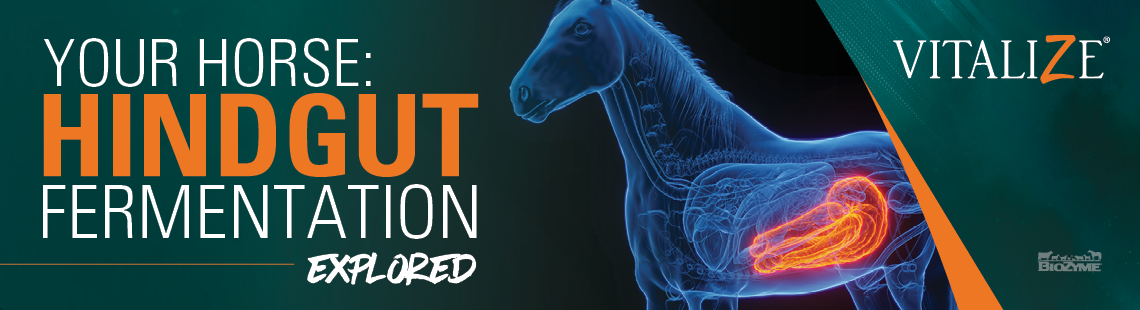
Horses are hindgut fermenters. But so are rhinos, rabbits, some rodents, and lovable-looking koalas. What does that mean, exactly? What is horse hindgut fermentation? Well, if you’ve been in many horse barns, it might mean that the fecal matter you clean up comes packaged in nice little balls. However, when we are discussing the horse digestive system, it is a bit more complex than that.
We’ve created an Equine 101 explanation of your horse’s digestive system and how you can best care for it. We know that good health starts on the inside. As a matter of fact, we know that 70% of the immune response starts in the gut. But did you know that your horse has a foregut and a hindgut?
At Vitalize®, our team is made up of equine enthusiasts who care about our horses every day. We know that your horse’s health is important to you, too. That is why we created this blog to take a look into horse hindgut health, what it means, and how you can be proactive. This information includes not only what products can help you support your performance horses, but where you can find a dealer for quality Vitalize Equine products.
Equine Digestive System
The horse’s digestive system is broken into two primary components: the foregut and hindgut.
Foregut
The foregut—immediately following the esophagus—is made of the stomach and the small intestine. It is where grain can be broken down through the digestive enzymes in the stomach and further absorbed in the small intestine.
Most fiber, like your horse’s hay, cannot be digested by the foregut’s enzymes. This fiber is instead sent to the hindgut and processed using the body’s symbiotic microorganisms, more commonly known as the “bugs” in the gut.
Hindgut
The horse hindgut—succeeding the small intestine toward the back of the horse—contains the cecum and the colon. It is where the fermentation of fiber occurs. This digestion of feed in the cecum and colon by the animal’s microbes is known as hindgut fermentation. Hindgut fermentation is a vital part of your horse’s digestion and health.
Be Proactive in Horse Care
Horses are natural grazers, which is why there are so many benefits to a foraged-based diet for horses. Humans tend to disrupt that natural tendency, especially when we ask them to live a competitive lifestyle. They are kept in stalls or hauled in trailers and only graze or eat forage for a limited amount of time each day. Therefore, we must work to proactively control our management programs.
Who is Vitalize?
Vitalize is a line of supplements for horses, dogs, and cats with proven solutions to keep your animal healthy and performing. We are a renowned brand of supplements designed to enhance equine health, provide a good gut feeling, and support bone, joint, and soft tissue health. Vitalize products support all equine enthusiasts. From the ranch horse owner on the Western plains to the Olympic jumper, Vitalize offers products to meet the needs of every horse and every rider.
The Vitalize brand is developed by BioZyme® Inc., a global fermentation company pioneering advancements in animal nutrition and health. Through innovative research and high-quality manufacturing, BioZyme creates powerful solutions that improve animal performance.
Our mission: undeniable positive impact on the health and wellness of your animals.
7 Tips for Quality Horse Digestive Health
We offer 7 tips to help your horse win the game against digestive upset.
1. Feed Smaller Meals Often
Feed your horse 3-4 times each day, if possible, since the stomach is so small. This will help reduce the overflow of undigested grains into the hindgut.
2. Ensure Your Horse has Free-choice Hay
As mentioned above, the equine digestive tract was created to graze slowly throughout the day. That means big, bulk meals can be problematic for their digestive process.
If you don’t have a setup that allows for foraging, an effective proactive care solution is providing free-choice hay to help reduce digestive upset.
3. Reduce Unnecessary Stress
When your horse is stressed, it goes into “fight or flight” mode. This stimulates the sympathetic nervous system. In this situation the body will inhibit digestion and prioritize organs like the heart, since it is more vital.
For example, if a horse needs to run away from a predator, digestion becomes a low priority physiologically. Our goal is to always keep digestion running smoothly, so reducing stimulating stressors is key to a happy animal.
4. Provide Plenty of Water
Horses can drink large volumes of water, especially in hot weather or during physical activity, so a consistent and clean water supply is vital. Make sure the water is fresh and plentiful.
5. Make Dietary Adjustments Gradually
Any changes to a horse’s diet should be made slowly over time. This allows your horse’s delicate digestive system to adapt. Sudden changes can disrupt hindgut fermentation and lead to issues.
It can lead to a drop in the pH causing conditions like laminitis, colic, hindgut ulcers or acidosis. On a competitive schedule, this can be tricky to get right. This partially explains why digestive upset is so predominant in the competition horse.
6. Pay Attention to Vitamins & Minerals
Horses require a balance of essential minerals and vitamins, including calcium, phosphorus, magnesium, and various vitamins. These nutrients are crucial for bone health, muscle function, and overall well-being. A well-formulated commercial horse feed or supplement can help meet these requirements.
7. Add Research-proven Digestive Health Supplements
Maintaining more good bugs in the gut than bad ones will help your horse ferment its feed effectively. At the same time, it reduces fluctuations in the gut pH that cause digestive issues. By incorporating a research-backed supplement into your program, like Vitalize , you can assist your horse in keeping a balanced gut.
Vitalize products are powered by AO-Biotics® Amaferm®, a research-proven prebiotic designed to enhance digestibility. Digestive supplements can also enhance gut health and reduce incidences of colic.
Vitalize for Hindgut Health & Digestion
Vitalize offers several products to give your horse a #goodgutfeeling. Want to find a dealer?
All of these products are easy to use and contain Amaferm to increase digestibility.
- Vitalize® Alimend® is a liquid product for horses designed to support gastric health and GI tissue, which may relieve occasional gastric issues commonly associated with training, traveling and performance. It contains MHB3®, a patented high-molecular-weight hyaluronic acid that coats the stomach and supports GI tissue integrity. It also has beta-glucans to support the gut and immune system.
- Vitalize® Equine Digest More® Plus is a pelleted supplement for horses designed to support hindgut health and digestion of nutrients as well as hoof and coat health. It contains MOS (mannan oligosaccharide) to help normalize hindgut microflora and support the immune system. In addition, biotin and zinc promote healthy skin, hair, and hooves. It is available in both 10- and 40-pound bags.
- Vitalize® Equine Gel is a prebiotic and nutrient-rich gel for horses designed to give immediate support to the digestive and immune systems. In addition to Amaferm, it also contains MOS, which helps normalize hindgut microflora and supports the immune system. Equine Gel works fast to support appetite and hydration, as well as to get the gut back on track after any occasional digestive upset.
Products for Nutrition
But Vitalize Products don’t just support digestive health and horse hindgut fermentation. There are also solutions designed to improve the nutrition your horse receives.
- Vitalize® Equine Vitamin & Mineral Supplement is a highly fortified, loose vitamin and mineral supplement designed for horses as a daily top dress or free choice supplement to support nutritional and digestive health. This product is fortified with organic trace minerals and high levels of vitamin E, biotin and B vitamins. It also contains garlic to help deter insects and is available in a 50-pound bag.
- Vitalize® Equine High Performance is a pelleted supplement highly fortified with vitamins and minerals designed to support the nutritional needs of performance horses. This supplement is fortified with vitamins, minerals and organic trace minerals. High levels of calcium also help maintain proper gut pH. It comes in a 40-pound bag.
- Vitalize® Equine Protein Pellet is a pelleted, natural protein supplement for horses, fortified with vitamins and minerals. It provides 28% natural protein while being fortified with vitamins, minerals and organic trace minerals to balance rations. It is available in a 40-pound bag.
Why is Hindgut Fermentation Important?
We’ve explained how the horse’s digestive anatomy works and how to be proactive in caring for it, but why does that matter? Well, because the hindgut plays a critical role in the well-being of your equine companion
The horse hindgut makes up 62% of the equine digestive system, vs. just 38% of the foregut. That’s a big area where lots can transpire, and it does. Your horse’s overall health starts in the digestive tract, so it is important to not only understand it, but also to keep it healthy and functioning.
Hindgut fermentation allows horses to extract energy and nutrients from plant material that would otherwise be indigestible.
Horse hindgut fermentation is a slow and continuous process. The continuity of the process is one reason why horses should graze or eat small, frequent meals throughout the day, to keep the fermentation process going.
The microbial population in the hindgut is highly sensitive to dietary changes, so it’s important to gradually introduce new feeds to avoid upsetting the balance of these microorganisms.
How does the hindgut impact health?
The horse’s hindgut and hindgut fermentation play crucial roles in horse health, impacting various aspects of its well-being.
First, horse hindgut fermentation is essential for breaking down complex carbohydrates. That includes chemical components like cellulose and hemicellulose, which are found in plant materials like forage (hay and grass).
Microorganisms in the hindgut ferment these compounds into volatile fatty acids (VFAs), which serve as a significant energy source for the horse. This process ensures that horses can extract energy and nutrients from fibrous plant material, which is a primary component of their natural diet.
Additionally, proper hindgut fermentation is vital for maintaining a healthy body weight and condition in horses. This is because VFAs produced during fermentation provide a substantial portion of the horse’s energy needs.
The Importance of Maintaining The Fermentation Process
When horse hindgut fermentation is efficient, horses can meet their energy requirements, which is crucial for growth, maintenance, and physical performance.
Moreover, horse hindgut fermentation helps maintain a stable pH balance in the cecum and colon, preventing harmful changes that could lead to digestive disorders. A healthy microbial population in the hindgut also aids in the breakdown of other nutrients, such as proteins and B vitamins, contributing to overall health.
Your horse’s digestive system is a delicate ecosystem.
However, it’s important to note that abrupt dietary changes or the consumption of excessive starches can disrupt hindgut fermentation and lead to conditions like colic or laminitis. You should note that the horse’s stomach is about the size of a football. The stomach is found in the foregut and can only hold about 2-3 gallons at one time.
Things go awry when that undigested feed gets pushed into the hindgut, where it doesn’t belong. The hindgut is made solely for fermentation. Having undigested grains inside it is harmful.
That’s why proper nutrition management is essential for maintaining a healthy horse hindgut.
Vitalize is Backed by Science
Vitalize products are research-proven, and our manufacturing facility utilizes an ionophore-free closed production system to ensure a safe, accurate product. In addition, BioZyme® Inc., the maker of Vitalize, is a member of the National Animal Supplement Council (NASC). All Vitalize products carry the NASC Seal, meaning they are produced under some of the highest quality standards of any equine supplements on the market.
Keeping a horse hindgut healthy does not need to be a challenge. Implement some preventative maintenance tips above with one of the Vitalize products powered by Amaferm. This combination keeps the “bugs” in the gut in check, while creating the perfect recipe for #agoodgutfeeling.
Want to Learn More?
Now that you know all about the value of horse hindgut fermentation, it’s time to support them correctly. Are you trying to decide which Vitalize product is right for your horse? Check out our Vitalize Product Navigator to determine the proper products for your management scenario.
Already using some Vitalize products, but you want to try more or different ones? You can buy them here.
Looking to buy the products locally? Use our online dealer locator to find the dealer nearest you!
If you’re not seeing a dealer in your area but still want to support local businesses, why not refer a dealer?