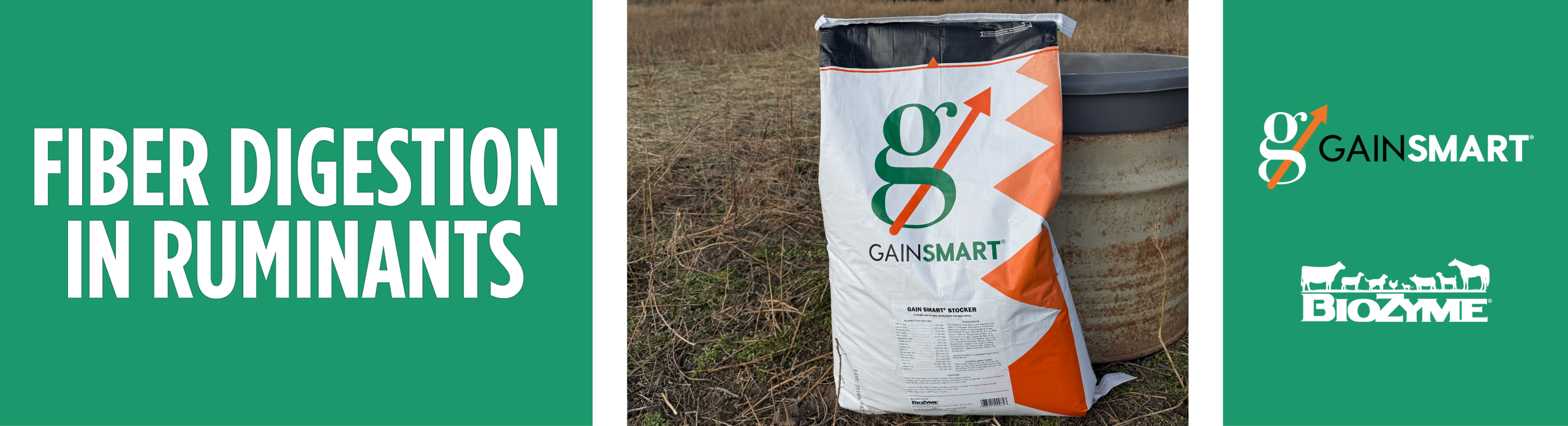
Fiber Digestion in Ruminants
Raising healthy, fast-growing stocker cattle takes more than just good grass and a salt block. It takes understanding how the rumen works and how to keep it running at its best. The rumen is the largest part of a beef animal’s stomach and plays a vital role in how the animal digests fiber. When fiber digestion in ruminants improves, cattle gain weight faster, stay healthier, and make better use of every bite of feed.
What is Fiber Digestion in Ruminants?
Cattle, sheep, goats, deer, bison, and even giraffes are considered ruminants because of their specially designed stomachs. Their stomachs have four compartments: the rumen, reticulum, omasum, and abomasum. The rumen acts like a large fermentation vat that can hold many gallons of feed and liquid. Inside the rumen live billions of microbes—tiny bacteria, fungi, and protozoa—that help break down the fiber in hay, grass, and crop residues.
Fiber, also called roughage, is found in the plant cell walls. It includes cellulose, hemicellulose, and lignin. While humans can’t digest fiber, ruminants rely on their rumen microbes to turn it into energy. The microbes break fiber down into volatile fatty acids (VFAs), which are the main energy source for cattle. When the rumen microbes are healthy and active, they produce more VFAs, leading to better feed efficiency and faster weight gain.
Why Fiber Digestion Matters in Stocker Cattle
Stocker cattle are in a growth phase, usually grazing pasture or eating hay and supplements before they enter the feedlot. During this stage, efficient fiber digestion is key to performance. Poor digestion can lead to slower gains, rough hair coats, and even digestive upset.
When cattle digest fiber more fully:
- They get more energy from forage.
- They need less feed to reach target weights.
- They have fewer digestive issues, like bloat or acidosis.
- Their immune systems work better, reducing sickness and stress.
Simply put, when fiber digestion in ruminants improves, stockers experience increased performance, and producers see greater returns.
How the Rumen Works
To understand fiber digestion in ruminants, let’s examine how the rumen functions. After cattle eat, they swallow their feed with minimal chewing. Later, they regurgitate it as cud, chew it again, and swallow it. When cattle chew their cud, it helps break the feed into smaller particles and mixes it with saliva. Saliva contains buffers that help keep the rumen at a healthy pH, usually between 6.0 and 7.0.
Inside the rumen, microbes attach to the plant fibers and begin breaking them down. The microbes ferment the fiber, producing VFAs, carbon dioxide, and methane. VFAs like acetate, propionate, and butyrate are absorbed through the rumen wall and used for energy. Carbon dioxide and methane are released when the animal belches.
Because rumen microbes do all the work of digesting fiber, keeping them healthy and balanced is crucial. If the rumen environment gets too acidic or if cattle go off feed, the microbial population changes, and digestion slows.
Factors That Affect Fiber Digestion
Four primary factors can influence fiber digestion in ruminants:
1. Forage Quality
High-quality forages with less lignin are easier for microbes to digest. As plants mature, lignin content increases, making the fiber tougher and less digestible.
2. Rumen pH
When pH drops below 6.0, fiber-digesting bacteria slow down. A balanced diet that promotes steady intake and proper buffering helps maintain a stable pH.
3. Microbial Balance
A healthy rumen has many types of microbes, each with its own role. Disrupting that balance—through stress, diet changes, or antibiotics—can lower digestion efficiency.
4. Feed Intake & Rate of Passage
If cattle eat too quickly or feed moves through the rumen too quickly, microbes have less time to digest fiber. Consistent feed intake supports steady microbial activity. 5. Temperature & Moisture
Extreme heat or cold can stress cattle, reducing intake and altering rumen function. Proper hydration also supports digestion.
Improving Fiber Digestion for Better Gains
The goal for every stocker producer is to keep the rumen microbes working their best. When microbes thrive, cattle thrive, gain efficiently, and remain healthy. Here are key ways to improve fiber digestion in ruminants:
1. Maintain Consistent Forage Availability
Avoid letting pastures or hay become too mature. Rotational grazing and timely hay harvest help maintain forage quality.
2. Provide Proper Supplementation
Even when forages are good, they can lack key minerals, protein, or energy. A balanced vitamin and mineral program like Gain Smart® helps cattle eat and digest efficiently.
3. Manage Stress
Weaning, transport, weather, and processing all create stress, which can lower feed intake and disrupt microbial activity. Minimizing stress helps maintain digestion and immune function.
4. Use Feed Additives That Support Rumen Health
Additives like AO-Biotics® Amaferm® help rumen microbes work more efficiently. Amaferm is a research-proven precision prebiotic included in Gain Smart mineral, which helps enhance digestibility and nutrient absorption. Ultimately, your calves will get more nutrients with each bite, gain more efficiently due to increased fiber digestion, and stay healthier, which all means more money in your pocket.
“Prebiotic-stimulated bacteria also generate more volatile fatty acids (VFA), which can bridge the gap of energy requirements. If a prebiotic can improve the digestibility of forage by 17%, resulting in 16% more VFA production, a calf can meet its energy needs to combat the concerns with current pasture DM and protein levels,” said Chris Cassady, Ph. D., BioZyme Director of Beef Technical Sales. “Add in the fact that 70% of the immune system resides in the gut and think about the positive health associations of feeding prebiotics. Healthier cattle gain faster and mean fewer vet bills, generating more profitability for you.”
Gain Smart minerals, powered by Amaferm, increase fiber digestion. Gain Smart offers four options for stockers to select from.
- Gain Smart Stocker maximizes efficient gain.
- Gain Smart Stocker Wheat maximizes efficient gain on wheat or small-grain pasture.
- Gain Smart Stocker Balancer RU1600 maximizes efficient gain and balances high-grain diets when mixing TMR rations. It includes rumensin for improved feed efficiency.
- Gain Smart Stocker HEAT® maximizes efficient gain when temperatures are above 70 degrees Fahrenheit.
How Amaferm Improves Fiber Digestion
Amaferm is a research-proven prebiotic that stimulates the natural microbial population in the rumen. This is critical to fiber digestion in ruminants. Amaferm increases the number and activity of the fiber-digesting bacteria, leading to greater VFA production. This means cattle get more energy from the same amount of feed or forage.
Studies show that Amaferm can increase fiber digestion by up to 17% and overall feed efficiency by as much as 10%. For stocker cattle, that can translate to improved average daily gain (ADG) of at least .25 pounds per day, healthier rumen function, and better overall performance.
When used in Gain Smart mineral, Amaferm gives stocker cattle a boost at the microbial level. It supports consistent appetite, better fiber digestion, and a more stable rumen environment—especially during times of stress or diet changes.
The Connection Between Fiber Digestion and Health
Good fiber digestion does more than improve growth and performance; it also strengthens animal health. When the rumen is healthy and the microbes are balanced, the animal’s immune system works better. The rumen wall stays strong and acts as a barrier to harmful bacteria.
Better digestion also means less undigested feed passes into the lower digestive tract, reducing the risk of digestive upset or scours. In addition, steady fermentation keeps the rumen pH in a healthy range, lowering the risk of acidosis or bloat.
Because Amaferm helps optimize fiber digestion in ruminants, cattle are better equipped to handle stress events, weather swings, or diet changes. A healthy rumen helps maintain appetite and supports immunity—two key factors in reducing sickness and treatment costs.
Economic Advantages of Improved Fiber Digestion
Increased fiber digestion in ruminants leads to direct economic benefits for stocker operators. Better digestion means less waste and more gain per pound of feed. For example:
- Higher average daily gain (ADG). Cattle put on more weight each day without extra feed.
- Better feed conversion. Cattle require fewer pounds of feed per pound of gain.
- Lower feed costs. More energy is extracted from forage, reducing the need for expensive concentrates.
- Improved herd uniformity. When all cattle are digesting efficiently, gains are more consistent across the group.
These benefits add up, especially in the stocker phase, where margins are tight, and performance differences can make or break profitability.
Practical Steps for Stocker Operators
To get the most from your forages and your cattle:
- Test forages regularly to understand nutrient content and fiber levels. BioZyme offers its customers complimentary forage testing. Contact your local Gain Smart dealer to learn more.
- Balance the diet with proper minerals and supplements, such as Gain Smart mineral, powered by Amaferm. We offer four Gain Smart formulas so that you can select the right option for your operation:
- Gain Smart Stocker maximizes efficient gain.
- Gain Smart Stocker Wheat maximizes efficient gain on wheat or small-grain pasture.
- Gain Smart Stocker Balancer RU1600 maximizes efficient gain and balances high-grain diets when mixing TMR rations. It includes rumensin for improved feed efficiency.
- Gain Smart Stocker HEAT® maximizes efficient gain when temperatures are above 70 degrees Fahrenheit. Contains HEAT technology, a combination of essential oils and garlic, to support animals when heat and insects are a challenge.
- Watch intake and manure consistency as signs of rumen function. Loose or overly firm manure can indicate digestion issues.
- Provide plenty of clean water to aid digestion and rumen function.
- Manage grazing to maintain high forage quality and prevent overgrazing.
The Final Word
Fiber digestion in ruminants is the foundation of performance and health in stocker cattle. When the rumen microbes are working efficiently, cattle can extract more energy from their forages, grow faster, and stay healthier. Managing the rumen through quality forage, proper nutrition, and the right supplements makes a measurable difference.
Gain Smart, powered by Amaferm, and from the makers of VitaFerm®, helps stocker cattle make the most of every mouthful by enhancing fiber digestion and nutrient absorption. The result is a healthier rumen, improved gains, and better profitability for producers.
Investing in rumen health through improved fiber digestion is one of the smartest ways to support both animal performance and producer success. When the microbes thrive, so do your cattle—and your bottom line.
Get Your Gain Smart Today
The Amaferm in the Gain Smart supplements helps calves digest and absorb the nutrients in all grasses and feedstuffs. Furthermore, it contains balanced vitamins and minerals to help your calf perform.
Finally, research proves that cattle fed Gain Smart, powered by Amaferm, gain .25 pounds more per day.
Now that you know about Gain Smart, you can get your calves gaining more efficiently while staying healthier.
Gain Smart is available at any of our local authorized BioZyme Dealers. Locate the dealer nearest you.
Would you like to receive more information about keeping your cattle gaining healthy, efficient pounds? Sign up for our newsletter.