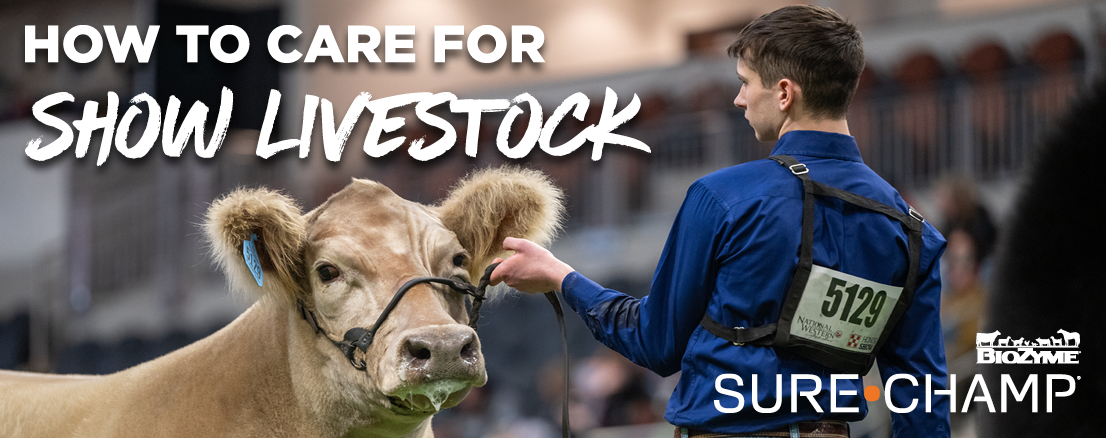
How to Care for Show Livestock
Champions don’t just happen when they walk off the trailer into the show ring at any given fairgrounds. Building champions begins long before that, in the quiet rhythm of daily chores. Banners are built at home, in the show barn, with buckets, feed pans, brushes, and hours of exercise and TLC.
If you are looking for how to care for show livestock, the answer is not complicated. It is consistent. It takes dedication, a routine, and the drive and desire to set goals and work hard enough to reach them.
Healthy, competitive show animals are the result of small habits practiced intentionally. Whether you are working with cattle, sheep, goats, or swine, the fundamentals remain the same. Sound structure, balanced nutrition, proper hydration, healthy skin and hair, and long-term joint support create animals that not only look in the show ring but also thrive at home.
We asked the BioZyme® experts, makers of Sure Champ®, for some advice on how they #Preptowin. Sure Champ is a line of livestock show supplements that proactively work to assist with the challenges created by the show environment. Here are five daily habits that turn good livestock into backdrop-ready contenders.
1. Build a Consistent Daily Routine
Before diving into hair products or feed additives, understand this: livestock perform best when their environment is predictable.
Animals thrive on rhythm. Feeding at the same time each day, exercising on schedule, maintaining clean bedding, and minimizing unnecessary stress all support digestive health and immune function. Stress disrupts appetite. Disrupted appetite affects fill, bloom, and performance.
A strong daily routine should include:
- Morning health check and feeding time
- Clean, fresh water regularly
- Exercise or movement
- Hair/skin, rinsing session
- Evening feeding and observation
When learning how to care for show livestock, start by mastering consistency. A calm, structured program allows the animal’s genetics and nutrition plan to express themselves fully. We recommend feeding animals every 12 hours. If you feed at 6 am, plan your evening feeding at 6 pm, which gives the livestock ample time to digest, and it should find them hungry again. Animals are very habitual, and they rely on you, so don’t let them down.
2. Prioritize Balanced Nutrition Every Single Day
Feed is not just fuel; a solid nutrition program is the foundation that builds your program.
Show animals are asked to perform at a higher level than commercial livestock. They must maintain muscle shape, adequate condition, hair quality, and bloom while staying structurally sound. That requires intentional ration formulation.
Understand Species-Specific Needs
Each species has unique nutritional demands:
- Show cattle require balanced energy for muscle and finish without excess fat.
- Show lambs need controlled growth and muscle expression.
- Show goats demand careful protein management for muscle definition.
- Show pigs require a precise amino acid balance for shape and structure.
Work with a nutritionist or experienced feed representative to develop a livestock feed ration that fits your animal’s stage of growth and target show date.
Monitor Body Condition Closely
Daily observation matters. Evaluate:
- Top line shape
- Rib cover
- Muscle definition
- Fill
- Hair and skin quality
If you are serious about how to care for show livestock, do not wait for weekly weigh-ins to make adjustments. Small, timely feed tweaks are far more effective than dramatic last-minute corrections.
Support Digestive Health
A healthy digestive system drives nutrient absorption. Consider incorporating supplements that support gut integrity and microbial balance, like Sure Champ, powered by AO-Biotics® Amaferm®. Amaferm is a prebiotic research-proven to enhance digestibility.
We know that 70% of health begins in the digestive system, and when animals stay healthy, they perform. When digestion is efficient, animals maintain bloom and consistency in appearance. Sure Champ products contain Amaferm, and when fed daily help animals maintain appetite and gut health, keeping them performing.
3. Hydration Is Performance Insurance
Water is the most overlooked nutrient in the show barn. Make sure your show livestock have constant access to fresh, clean water. No exceptions.
Hydration impacts:
- Feed intake
- Muscle function
- Temperature regulation
- Skin and hair condition
- Joint lubrication
Even slight dehydration can reduce appetite and dull overall appearance.
Daily Hydration Practices
- Scrub water buckets daily. Residue reduces intake.
- Monitor consumption trends. Sudden drops signal problems.
- Adjust to weather changes, especially heat and travel.
Show animals often experience stress during hauling and exhibition. Stress can reduce water intake, which in turn reduces feed consumption. Preparing animals to drink from familiar buckets at shows can minimize disruption. For instance, if your show pigs are accustomed to drinking from nipple waterers, be sure to train them to drink from buckets at home before traveling to shows so they don’t go off water at the show.
Another way to ensure your animals stay hydrated at shows is to incorporate Sure Champ® Liquid Boost® into their diets. Liquid Boost is a liquid for all livestock designed to provide immediate support to the animal’s digestive and immune system. It contains Amaferm, MOS, which helps normalize gut microflora and support the immune system, and flavoring that helps drive intake of feed or water.
When considering how to care for show livestock, hydration should never be an afterthought.
4. Skin & Hair Health is Vital
Grooming is not cosmetic fluff. It is functional management.
Daily skin and hair care stimulates circulation, distributes natural oils, and allows early detection of health concerns. It is also a training opportunity, reinforcing calm behavior and trust between exhibitor and animal.
Daily Grooming Habits
For show cattle:
- Rinse or wash as needed – rinsing daily helps train the hair. Washing 3 times a week with a conditioning shampoo helps keep the animal clean and helps build back natural oils.
- Blow dry thoroughly to promote hair growth and work the hair in the direction you want it to lay.
- Brush and train hair daily
For sheep and goats:
- Rinse or wash as needed – rinsing daily helps train the hair. Washing a few times a week with a conditioning shampoo helps keep the animal clean and helps build back natural oils.
- Brush and maintain the hide condition.
- For sheep, keep the legs wrapped, but blow out and work leg wool each night.
- Exercise to enhance muscle shape. There are multiple ways to exercise your sheep and goats.
For pigs:
- Rinse appropriately and wash with a conditioning shampoo a few times a week, to keep skin conditioned. Blow out with a blower to work in conditioner.
- Brush daily to stimulate skin
- .Monitor for scratches or skin issues
Grooming is also inspection time. Check for:
- Swelling in joints
- Hoof condition
- Skin lesions
- Signs of lameness
If you want to understand how to care for show livestock effectively, treat daily hair and skin care as both preparation and prevention.
5. Protect & Support Joint Health Early
Soundness wins banners. Structural issues end careers.
Show animals, particularly those pushed for muscle and growth, place stress on joints and connective tissue. Daily exercise programs, firm footing, and proper nutrition all play roles in maintaining joint integrity.
Exercise with Intention
Controlled exercise strengthens muscles while supporting joint stability. Avoid abrupt increases in workload. Gradual conditioning builds resilience.
For example:
- Walk livestock consistently on appropriate surfaces.
- Use structured exercise plans for your animals.
- Monitor all show projects closely for stiffness or uneven movement.
Maintain Proper Footing
Bedding should provide cushion without being overly soft. Hard, slick surfaces increase the risk of injury. Clean, dry pens reduce strain and slipping.
Nutritional Joint Support
Trace minerals such as copper, zinc, and manganese contribute to connective tissue development. Balanced nutrition supports skeletal strength and long-term soundness. We recommend adding Sure Champ Joint Juice to your daily feeding plan as animals get bigger and add more stress to their joints. Joint Juice is a liquid product for show livestock designed to support joint health utilizing patented technology. Joint Juice contains MHB3®, a patented high molecular weight hyaluronic acid, and lubricates joints and supports mobility while also supporting sustainable soundness.
Joint health is not something to address only when a problem appears. It should be built into your daily care plan from the start.
The Power of Observation
Perhaps the most underrated habit in caring for show livestock is simply paying attention.
Successful exhibitors develop a sharp eye. They notice:
- Subtle appetite changes
- Shifts in posture
- Variations in manure consistency
- Changes in behavior
Early intervention prevents small issues from becoming major setbacks. A cough caught early. A slight limp addressed quickly. A minor feed adjustment made before weight drifts too far.
Travel & Show Day Considerations
Daily habits should continue even on the road.
During show season, regardless if you are at home, on the road, or at a show:
- Maintain feeding schedule as closely as possible.
- Offer familiar water sources. Start adding Sure Champ Liquid Boost at least three days before travel until you get home from the show. Some exhibitors feed it year-round.
- Continue skin and hair health routines.
- Provide adequate rest between classes.
Travel stress can disrupt digestion and hydration. Planning ahead preserves condition and composure.
Animals that are calm, hydrated, and consistent in their routine show with confidence. Judges notice balance, well-trained animals that enter the ring well-presented, but those traits are rooted in care long before show day.
Mental Preparation for Exhibitors
Livestock showing is not only about the animal. It is also about the exhibitor.
Daily responsibility builds discipline, time management, and problem-solving skills. Youth exhibitors who master how to care for show livestock learn to:
- Set goals
- Track progress
- Adjust strategies
- Accept feedback
The show ring becomes a classroom. The barn becomes a laboratory for growth.
Final Thoughts on How to Care for Show Livestock
If you are searching for how to care for show livestock, remember this: excellence doesn’t happen overnight. It happens over many days and long nights. In the show barn, out in the yard, behind the scenes.
Healthy, show-ready livestock are not created through last-minute polishing. They are built through:
- Consistent routines
- Balanced, species-specific nutrition
- Intentional hydration management
- Purposeful skin and hair health practices
- Proactive joint and structural support
Each bucket scrubbed. Each ration weighed. Each brush stroke applied. Each step walked.
Over time, these actions stack into strength, hair-popping confidence.
Show season will always bring nerves and anticipation. But when daily habits are strong, preparation replaces panic. The animal enters the ring not as a gamble, but as a reflection of disciplined care.
In the end, learning how to care for show livestock is about stewardship. It is about honoring the responsibility that comes with feeding, training, and presenting an animal at its very best.
Get your Sure Champ Today
We’ve mentioned just a few of the several Sure Champ products to help you care for show livestock. However, there are several others you can use daily. We also carry fast-acting gels to help you solve challenges as they arise – like Sure Champ® Clench Gel to support hydration and nutrient absorption for healthy stool or Sure Champ® Climate Control Gel when temperatures rise.
There are two simple ways to secure your Sure Champ products. Order online today. Perhaps you prefer shopping local. You can find a BioZyme dealer near you to purchase Sure Champ products or any of the products from the BioZyme family of brands.
Looking for more information on how to care for show livestock? Check out our video library.