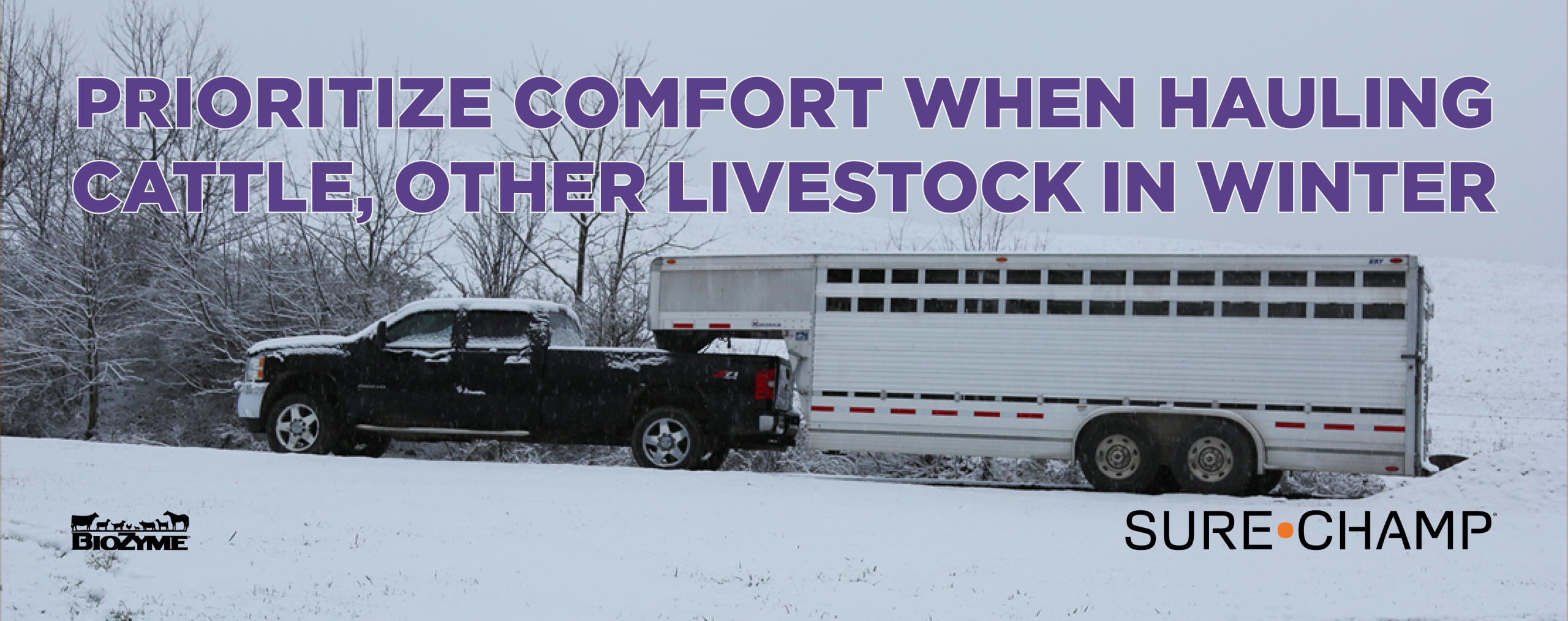
Hauling Cattle
When you have a passion for your sport, you’ll go to great lengths to ensure you can compete. Sometimes, that means hauling cattle or goats, or pigs halfway across the country to show livestock. With a vast number of major stock shows in the Midwest, exhibitors living on the coast are likely accustomed to hauling their stock for long stretches. But for the rest of us, how should you keep your livestock healthy and safe when winter weather confronts you head-on? Let’s find out.
Hauling cattle, or any species for that matter, can be challenging for long stretches. Add in winter’s unpredictable weather, icy roads, and decreased visibility, and it often can be downright treacherous for both humans and livestock. However, with winter shows like Cattlemen’s Congress, National Western, and others on the horizon, Sure Champ® provides this guide to keeping show projects feeling their best and arriving at their destination ready to eat, drink, and perform.
Keeping the Livestock Stress Free
The Gohr family from Madras, Oregon, is no stranger to hauling cattle long distances. The Hereford and Angus breeders make the 23-hour trek to Denver each January. For them, to get to the Cattlemen’s Congress in Oklahoma or the Fort Worth Stock Show, they’ll be on the road for 30-plus hours.
“We manage their stress before we even put them in the trailer, and that starts with quality nutrition,” said Brad Gohr. “We believe in having our cattle on a high plane of nutrition and in optimal health year-round. All of our runs have VitaFerm® Stress Tubs in them as a source of vitamins, minerals, and Amaferm® to keep our animals in optimum health.”
Traveling in the Cold
When it comes to hauling cattle – or any livestock – in the winter, Gohr said he prioritizes cattle comfort and hydration, especially on long trips.
“Believe it or not, it is not wildly different than hauling them in the summer. We make sure that the cattle are comfortable in the trailer,” he said.
Gohr offers several tips to ensure his cattle are comfortable while traveling in the winter:
Provide Adequate Bedding
The Gohr family beds their trailer with shavings and water to keep the shavings from blowing. The difference is that in the winter, they use slightly less water as it is apt to freeze in single-digit temperatures. After the shavings are in and wet down, they add a layer of straw to the trailer for additional cushion and comfort.
“The cattle always like to bed down in the straw, and it provides an added layer between them and the shavings if they get ice on them, which does happen since it is in the single digits most years,” Gohr said.
Ventilation is Key
Although keeping animals warm is important, proper air flow is also important. Most cattle are haired up and produce natural body heat, so Gohr said he keeps the roof vents open for ventilation. He just turns them the opposite way he does in the summer. That way, they are getting fresh air, but not the same blast they do in summer travel. He also adds the plexiglass slats to one side of the trailer, which serves two purposes. First, it reduces the steady chilly air coming through. And just as importantly, it keeps the highway salt from spraying and splashing in and on the cattle that his family has worked on to get hair and skin perfected on.
Keep Animals Hydrated
“It is just as critical to keep them hydrated in the winter as it is in the summer,” Gohr said. “Cattle and all animals typically need more water in the winter since they drink less due to the water being so cold, and the fact that they are eating less.”
Gohr suggests traveling with a water tank if space allows, since many places like gas stations, hotels and truck stops turn off their outside water outlets during the winter to prevent freezing. And speaking of freezing, don’t forget a tank de-icer to thaw that water that is likely to freeze while traveling.
Plan Ahead
Mother Nature is just downright unpredictable. That is why it is vital to plan the best you can. A proactive approach is always the best, regardless of whether traveling across the state or across the country. The Gohr family, similar to many others, likes to lay over at least halfway to their show destination, if not trying to outrun a storm.
A layover point, such as a county fairgrounds or another producer’s show barn and runs, allows the cattle to get off the trailer to stretch and exercise. It also gives them the chance to get some feed and hay. Likewise, it allows the drivers an opportunity for a few hours of sleep.
“Layovers give our cattle the chance to rest without bouncing down the highway. We like to think with a trailer our size bedded down the way we do, they are pretty comfortable,” Gohr said. “But nothing can beat getting out in a pen – with good footing – and giving them a chance to chill and rest.”
Hauling Cattle is Easier with Sure Champ
We realize that not everyone will haul cattle or any species 30 hours to a show; however, many of the same challenges exist if you are traveling just 3 hours. Hauling livestock causes stress, and a stressed animal is likely to go off feed and water. You’ve worked too hard to lose that bloom and fill on the way to a show.
That is why Sure Champ developed a line of products that support the health and well-being of show livestock. Several quick-response gels and liquids give livestock exhibitors like the Gohrs options when they are traveling.
“We like to give all of our cattle a dose of the Sure Champ Appetite Plus® Gel before we load them in the trailer to help manage their stress. We’ve traveled enough to know this product helps their gut working right, so when we do get to our destination, they will eat and drink without missing a beat,” Gohr said.
He added that if they do get to a show, and the cattle don’t want to drink, Sure Champ Cattle Drench is their go-to product. This green drench contains enzymes that generate a more rapid digestive response and MOS that helps normalize gut microflora and support the immune system. Furthermore, like most Sure Champ products, it also contains AO-Biotics® Amaferm®, a prebiotic research-proven to enhance digestibility.
Small Species Rely on Sure Champ, Too
Although Gohr spoke specifically about hauling cattle, many of his tips hold regardless of the species you are hauling to winter shows. Proper bedding, good ventilation, and hydration are all important to ensuring your animals have a safe, comfortable ride.
Remember, animals do generate a lot of body heat. Temperature fluctuations between transporting them and overheated stock show facilities often call for Sure Champ Climate Control Gel. Climate Control supports digestive health and recovery when temperatures are above 70 degrees, which is often the case in major event show barns. This quick-response gel, powered by Amaferm, also promotes appetite and water intake. It contains the HEAT® technology, a combination of essential oils, to support animals when heat is a challenge.
Sure Champ® Liquid Boost® is designed for all livestock to provide immediate support to the animal’s digestive and immune system. Its flavoring helps boost water and feed intake. It also contains Amaferm and MOS, much like the Cattle Drench.
The Final Word
We hope you will feel more comfortable about hauling cattle, sheep, goats, and pigs to winter shows. Sure Champ wants to help you to #preptowin, but our ultimate goal is to provide you with valuable information to make you better stock handlers.
If you are looking for more information about how to care for your show animals, you’ve come to the right place. Our educational blogs offer tips and ideas for every species.
Perhaps you want to sign up for our newsletter and receive some timely advice in your inbox. We encourage you to do that, too!