Letters From Lisa – June/July 2020

It seems a bit awkward to be writing about NEW stuff with COVID-19 ruling our lives, but it certainly has forced us to love the word, so maybe it is appropriate. When I Googled ‘dealing with NEW stuff’ the results included these topics: the new normal, new technology, a new boss and having a new baby. Quite a list. One phrase on that list would not even have been there just three months ago. This is a perfect segway into that word NEW and how we can look at it if we choose to do so.

NEW just by its nature means change. So, for anything NEW, we have a choice. We can control it or escape it. Knowing you can’t ultimately escape, one will go through phases of a response to the NEW, which “should” end in acceptance. Acceptance that could lead you to a pot of gold. The belief in that pot of gold as the best option, has been ingrained in me since I was born. With that pot of gold picture in your head, one can embrace change and never go through the normal other responses to change which are shock, fear and forced adjustment. Instead the change embracing person goes straight to acceptance and begins building on the NEW.

It is in that vein that BioZyme® has launched the NEW product line VitaFerm® Conserve™, is investigating a NEW packaging option for mineral that is not a bag (yes you read that correctly), is moving to a larger state of the art facility for all small pack products and is looking toward partnerships that have never existed before, due to being viewed as competition, to ensure we have the best products on the market for the animal and the expectations we place on them to CHANGE all the time without giving them any time to go through the normal four stages of change.

Why is all this NEW exciting?

Because done right, it leads to a pot of gold. Not only a pot that helps grow our dealers’ business, but a most important pot that supports the animal, so they get consistent, effective nutrition allowing them to maximize their genetic potential. With all this NEW swirling around it is easy to forget those things that will always remain the same and for which we should be thankful: Our appreciation for your continued support. Support in good times and in not so good, during struggles and during victories. It means the world to us.

This quote by Henry Ward Beecher says it best, “The head learns new things, but the heart forever practices old experiences.” Thanks for your heart and how you so graciously share it with us!

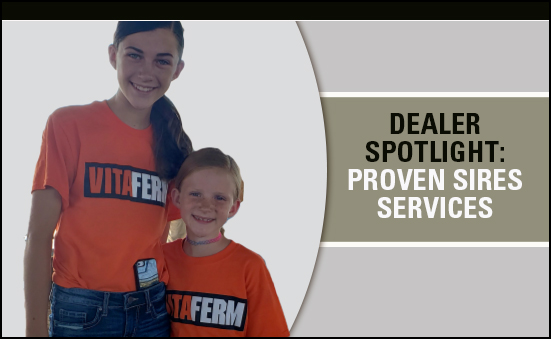
Dealer Spotlight: Proven Sires Services

Provides Nutrition Needs To Bull Customers and Others

Cattle producers are often said to be the original stewards of the land. Their genuine passion for caring for their land and livestock is in their blood. They know if they take care of their cattle and the land, the cattle will take care of them. Taking care of his cattle before and after the sale is how Mark Rohr, Proven Sres Services, Hays, Kansas, became a BioZyme® dealer in 2014.

As the owner of Lazy H Ranch, where he markets between 100-150 registered Angus and Charolais bulls each spring, he wanted to be sure that those bulls continued to receive the best nutrition possible after the sale. That’s when he became a dealer and started recommending his customers use the VitaFerm® and Vita Charge® products to keep their new bulls healthy and reproductively sound.

“I wanted to offer the best of the best for my bull customers. At least 35% of my customers have started feeding VitaFerm, and that accounts for at least 50% of my bull sales,” Rohr said.

As a VIP dealer, Rohr not only offers the best products to his customers; he also offers top-notch service. He connects with them each monthly, if not more often and makes sure they have everything they need. He answers their questions promptly and relies on his ASM and National Sales Director for answers when he doesn’t know the answers, knowing they will respond quickly.

He suggests utilizing the ASM as a lead to new customer relationships. He appreciates when the ASM makes a cold call first to explain the Amaferm® advantage and ROI of the various product lines. Then, he can follow-up and share his own unique experiences with his customers. As a user of the products, Rohr can give first-hand accounts of what the products do, how they work and the benefits he has experienced in his own herd.

Building trust is the first step in any business relationship, according to Rohr. To build trust he shares his own experiences and works potential customers using other products into the VitaFerm products gradually.

“Offer them a product we have that their company doesn’t. Something like Vita Charge to help reduce stress with vaccinations and weaning. Or if I want them to try the VitaFerm products, I tell them not to go full-bore, but to try it on half or part of their cows so they can see the difference for themselves,” he said.

Rohr hosts a customer appreciation event each summer. He also makes sure to have plenty of BioZyme and Amaferm information available at his sale so his customers can leave with the information they need about a high-quality nutrition program.

As the industry becomes somewhat more volatile, Rohr said sharing key benefits that can be looked at as opportunity costs of the products will be even more important than ever. For cattle producers those include conception rates, especially for those utilizing A.I. and embryo transfer, calf vigor at birth and cows cleaning themselves at calving. Bull fertility is also key.

“I am in partnership on another set of bulls on feed at another location, under different management but the same mineral program, using a different vet service, we had 100% semen check there, and that vet wanted to know what we do to make that happen. As far as fertility in our bulls, the VitaFerm mineral and Amaferm advantage has been awesome,” Rohr said.

With results like that, it’s easy to see how Rohr can use personal experiences to build his customer base and help his bull customers at the same time. Thanks for being a part of the dealer network, Mark!

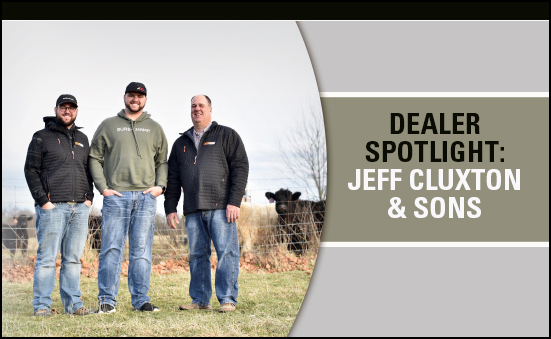
Dealer Spotlight: Jeff Cluxton & Sons

Second Generation Dealer Provides Services and Answers to Livestock Challenges

Providing a quality product to customers while delivering top-notch services are traits that come naturally for second-generation BioZyme dealer Jeff Cluxton, at Ripley, Ohio. Jeff’s dad, Tom, started using VitaFerm® products in 1974 and became a dealer. The family has appreciated the impact that the BioZyme products have had on their 175 head cow herd and have shared that with their peers.

“VitaFerm’s been good to us. It’s a product that we strongly believe in as users of it, so it helps us be able to sell it to people. We’ve always used the product here on the farm, so we know what works best for people.

If they are in the embryo world, we try to direct people to Concept•Aid® products. Even our commercial cattle producers, will use the Concept•Aid 8/S or the Concept•Aid tub,” Jeff said.

Perhaps the thing that differentiates Jeff and assists him in helping others is the relationship that his family has had with local veterinarian Brian Cowdrey. According to Jeff, Dr. Cowdrey’s parents used the VitaFerm products and now he uses them too. And when a client has a challenge that can be fixed with the help of a nutrition product, the vet sends his client Jeff’s way, which Jeff says makes for a unique situation.

“If the customer will be obedient and do what the veterinarian recommends, we get a lot of business from Dr. Cowdrey. Word of mouth from the vet drives a lot of my business. About four to five years ago we had an outbreak of anaplasmosis here in the county, and word of mouth and VitaFerm offering CTC and IGR became a very popular product around here,” he said.

But that isn’t the only relationship that has helped Jeff grow his business. He said he’s been able to market the VitaFerm Gain Smart® Stocker and Vita Charge® Stress Tubs to the Buckeye Valley Beef Cooperative. The group of local, younger beef producing families are working to raise beef for the consumer to buy from the farm or through local retail outlets, with the knowledge that this beef is locally sourced and has never been treated for sickness. This group of progressive cattle producers has used the Gain Smart Stocker to help ensure the cattle they are feeding for their ultimate customers put on healthy, efficient pounds and meet their strict criteria. He said they use the Stress Tubs at weaning.

As an on-farm dealer, Jeff says he is always available to help his customers. He does chuckle that his wife suggests he set some office hours, but he says he’s here to help. For instance, he has an old truck that he’ll leave a bag or two of mineral in if someone is in the area at a kid or grandkid’s ball game and wants to pick it up. He even tells about a customer who drove out of his way to get 20 bags because Jeff had the product he wanted on hand.

“I won’t turn down a customer. I will help someone out. People are busy, but you can gain a lot of business by being flexible,” Jeff said.

He shares a story from last Christmas. Since he’s also an Umbarger dealer, he has the chance to sell Weaver show supplies. Somebody had ordered a show box for Christmas gift. He offered to wrap and deliver to the customer’s front porch on Christmas Eve when that family was at another Christmas celebration. The customer was overjoyed by the service Jeff provided. He said by providing that type of service, he sees the potential of a return customer for show feed or breeding mineral in the long-term.

One of the most valuable lessons Jeff learned from his dad, and one he shares is to always be willing to find out the answer to a question when you don’t know the answer.

“Always be truthful and honest to your customer, and they will always come back to you. If you don’t know the answer, be willing to say you don’t know but you will find out. That goes a long way for you.”

Jeff Cluxton & Sons is a dealer that shows care that comes full circle while differentiating his business through long-time user experience and outstanding customer service. He’s sharing the knowledge from his dad with his customers in Western Ohio. Thanks for being a great dealer, Jeff!

Help Youth Succeed Through Remote Learning

Remote learning. It’s the phrase that students, parents and teachers did not expect to add to their vocabulary this spring when COVID-19 was declared a pandemic. However, with each new update and each governor’s recommendation, remote learning became a part of daily lives in households across the country. School districts devised lesson plans, some delivered their students’ packets via the bus route or mailed and emailed lessons to students on a weekly basis.

Youth might have missed out on the chance for building relationships with their peers and mentors, state FFA contests and conventions, spring sports, prom and more activities, but for those in agriculture, it provided an opportunity to work more with their livestock projects, help out with calving and lambing and perhaps even help prepare for spring planting. Remote learning and sheltering-in-place has allowed many families to spend more time together, learning and working ahead on junior national contests or county fair projects – both livestock and nonlivestock related.

When schools started closing their buildings this spring, online learning and virtual tours seemed to pop up almost instantly. Farm Bureau organizations, breed associations and other ag companies shared content that ranged from simple coloring sheets and word-searches to online judging contests and virtual ag tours.

What did we do?

We were ready. Before the chaos ensued, the Sure Champ® in the Classroom program existed. This online resource offers a variety of learning ideas for educators and parents.

Sure Champ in the Classroom offers various information about cattle, pigs, goats and lambs. Educational information ranges from selection, feeding and nutrition, caring for and preparing for shows and showmanship. General nutrition information is also available as well as quizzes with answer keys for assistance to learning. Educational videos are online for cattle and pigs that detail showmanship, feeding, animal care and reading pig notches.

In addition to the Sure Champ in the Classroom resources, a regular feature of the Sure Champ digital efforts includes an online judging tool, Mark that Card, complete with judging classes and official placings with cuts and reasons. These have been very popular on the Sure Champ social platforms and are all archived at www.surechamp.com.

Local Resources

What can you as a dealer do to help provide some information and resources to your customers in this time of remote learning? Maybe you had a spring livestock clinic planned; don’t let social distancing spoil your plans. With today’s technology on phones and handheld devices like tablets and iPads, it would be efficient and effective to record something from your local store or barn to post to your website or social media to help educate your young customers.

Talk about animal nutrition and break down the various feed ingredients in a ration and describe what they do. Record your own showmanship or clipping clinic. Perhaps you can offer resources for those youth preparing a speech for their junior national or their county club days. Or, you could offer to listen to that speech over the phone or via FaceTime to give some pointers on content or delivery. Offering your time as a resource is a valuable tool to a young person; they won’t forget time that you give them.

Share with us and your fellow dealers what you are doing to serve as a resource and help your young customers #preptowin during this time of social distancing. Post your ideas and your results on the BioZyme Dealer Facebook page so others can learn from you. We are all in this time of uncertainty together. Let’s work collectively to help our young people.

Effective Action: Let’s Lend a Hand Every. Day.

Have you ever noticed how people show up in times of crises or particular times of year? Food and toy drives ensue during the holidays for those in need. Elderly and disabled were encouraged to post a red, yellow or green sheet of paper in their window during the COVID-19 shelter-in-place to indicate if they were fine or needed assistance. And blood drives are ramped up during particular seasons. All of these are great causes and worthwhile efforts, but what if we provided a helping hand year-round and really demonstrated care that comes full circle.

Be present.

During times of uncertainty, perhaps the most important thing we can do is be present. Now, maybe this doesn’t happen if you’re in isolation or separated by miles from friends or family. However, technology has made it possible to keep the lines of communication open and even “see” each other. Technologies like FaceTime, Zoom, Facebook Messenger and Marco Polo allow you to “chat” virtually like you’re in the same room with your friends or customers. Sometimes just a simple check-in, even via a phone call, with someone to see how they are doing will brighten their day.

Listen and watch.

Agriculture is a rocky road, and many of your friends and customers are likely struggling. When you do check in with your customers, friends and family, take time to really listen. And more importantly, watch their actions. We can all agree, agriculturalists are a humble group who don’t like to talk about themselves, so if they are having challenges, you might be able to tell that just as much by their actions and what they don’t say. And, if you sense a genuine concern for their health, reach out to them or someone else close to them to try to help them.

Offer resources.

Yes, food drives around the holidays are great. But, what about the other 10 months of the year? As summer approaches, fresh garden produce is typically bountiful, so why not share in the bounty. Maybe you have a place for a garden, but not the time, offer your garden spot to someone to use in exchange for some veggie sharing. Perhaps you’re like me and love to garden, but don’t like to can. Offer your garden goodies to friends and neighbors for the picking. And although fresh produce is nice, make sure people have other things they need year-round.

Give back to the youth.

It is nice to show appreciation to the youth who buy their feed and supplies from you. Likely, many of their parents are your customers too. Hopefully, summer shows will not be canceled like so many late winter and spring shows were. Offer a show supply credit if they buy x-amount of show feed or supplements. Or if the summer shows are canceled, offer to buy one of their animals to supply your own family (and maybe others) with some fresh protein.

Volunteer.

There are always ways to give money and resources; however, one resource that most everyone has to offer is their time. No matter how big or small your community is, there is likely a way for you to give your time. Volunteer opportunities exist through community, school, church and civic organizations. They can be short-term or long-term. Giving your time can be one of the most rewarding things you do. Be sure you are giving to something you genuinely care about and that you volunteer with a good motive and not just self-recognition.

Care that comes full circle. It’s not just a motto, but it’s a simple way we should all chose to live. You can make a difference in your neighborhood or community 365-days a year by giving of your time, talents and resources and simply being present. In many of our rural communities, people became more friendly during the “shelter-inplace” time. People waved and smiled as they met you on the road. They reached out more. School kids wrote letters to shut-ins. The world became friendly. Let’s keep these smiles going and continue to lend a hand, every day.

Communication is Key During a Crisis

In times of uncertainty, fear is a common emotion. The national and world health crisis of this spring has left everyone with several questions. Will summer events be canceled or postponed? When will we get to see elderly relatives? Will our kids ever go back to school? Why didn’t I buy more toilet paper? With so many uncertainties in the world, the routine of having a job to come to each day gives people some peace of mind. However, many businesses have changed the way they operate. With the need for essential workers in the agriculture industry, you can help your employees cope by increasing communication and ensuring them that everything will be alright.

Hinda Mitchell, president of the Inspire PR Group, shares seven ideas on how to communicate with your team during these challenging times.

Overcommunicate. But keep it simple. Your employees are on information overload right now, so keep your messages short, to the point and upbeat. Mitchell suggests using both the push strategy and pull strategy for disseminating information. Push information out via email, text messages and even a private website dedicated to the particular crisis. Provide additional information that might be useful to employees so they can pull from that information when needed. At BioZyme®, a private webpage was started for employees that discussed new safety and health protocols, how and when to report any sickness, who to ask for help when working remotely and offered updated information from the CDC and WHO that employees could look at as they wanted.

Focus on health and safety. Personal health and safety of your employees and customers should come first. Make sure you are providing the resources needed to keep your team safe: disinfectant sprays and wipes to gloves or masks. Encourage your staff to continue a healthy lifestyle with good eating habits and exercise; spring is a great time to be outside and get some fresh air.

Provide extra support. Everyone has a unique situation, and it is imperative to be understanding during these times. Identify the circumstances of each individual and offer them resources that might be helpful. This could range from needing childcare due to school closures or caring for a loved one.

Clarity is key. “Be crystal clear on your employee expectations, benefits and other personnel matters during this time. What are they supposed to do if they or a loved one falls ill? What is your PTO, sick time and absentee policy? What have you done to change or enhance benefits to address this unique time? Now is not the time for rigidity; flexibility should drive as much of human resources decision-making as possible,” Mitchell writes.

Little things matter. Show your employees you care with a catered lunch, a small note of appreciation, a gift card for gas or groceries or even a verbal thank-you. If you see or talk to a person who doesn’t seem their normal self, ask them if they are alright and offer to get them help. Sometimes being a listening ear is all a person needs. Your gesture doesn’t need to be substantial to be remembered.

Do the right thing. During any crisis it is imperative to follow the orders of all government officials – local, state and federal. It is also important to exercise patience with your employees. Reassurance about their jobs, the industry and the state of the world is always a good thing during times of chaos.

Remind them the challenges are temporary. Although every day might seem like a scene from the movie “Groundhog Day,” this is a short-term challenge, and normalcy will return. There is always a storm before a rainbow, and though the times might seem tough, brighter days are ahead.

Communicating with your employees is critical to keeping them informed, calm and feeling like part of the team during any challenge. Be sure that you stay calm and level-headed. Don’t panic or use harsh language. Be the leader they need in a time of uncertainty to show that you care, and you will be able to get the best back from them. That is what “Care that Comes Full Circle” is all about.

Letters From Lisa – May 2020

How can I be helpful in challenging times and good times?

The one thing to remember in good times is to Praise.

People always welcome praise, but it becomes far more meaningful when it is linked to concrete examples. “Great presentation, well done,” is nice feedback to receive, but “Great presentation; your explanation of how this impacts our customer base will help us improve customer loyalty,” pinpoints exactly how someone’s contribution benefits the company. Giving specific, targeted feedback tells your team that you’re paying attention.

The same goes for providing constructive feedback on areas of improvement: keep the feedback personalized and actionable. Consider the golden ratio of 5:1– if you deliver five positive takeaways to one negative piece of feedback, people won’t feel overwhelmed with criticism. The goal should be to help people grow and develop, so providing ongoing, timely praise is crucial.

The one thing to remember in challenging times is to have Faith.

“Don’t worry about anything; instead, pray about everything. Tell God what you need and thank Him for all he has done. Then you will experience God’s peace, which exceeds anything we can understand. His peace will guard your hearts and minds as you live in Christ Jesus.” (Philippians 4:6-7)

These are beautiful verses, but I believe many miss the true power of this scripture because they stop at verse 7. Check out the warning in the subsequent verses (Philippians 4:8-9):

“And now, dear brothers and sisters, one final thing. Fix your thoughts on what is true, and honorable, and right, and pure, and lovely, and admirable. Think about things that are excellent and worthy of praise. Keep putting into practice all you learned and received from me—everything you heard from me and saw me doing. Then the God of peace will be with you.”

Faith is hard to incorporate in life. I recently saw this story on one of our dealer’s Facebook posts. It represents faith in action in challenging times or eight straight days of not giving up when all things pointed to saying, “forget it.”

Shared from Joshua Golla’s Facebook. Edited for space.

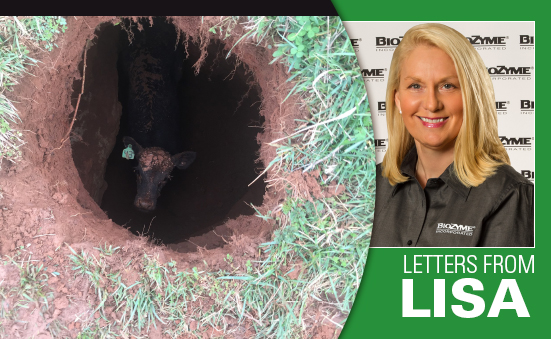
“On Wednesday March 18th we had a 5-week-old bull calf disappear from the field. No trace of what happened. His mother bawled for him for two days to no avail. On Saturday when we checked the cows his mother ran around the field bawling and we followed her (they usually know where to look and will tip you off if you watch them) however she stopped in the field and appeared to start grazing again. We walked every fence row and checked every brush pile, no luck.

We began to assume that coyotes had carried him off. I found it hard to believe that a 40-50-pound coyote would carry off a 150-pound calf and not leave a trace. So, each time I would check the cows I would look for that calf. However, life was moving on as we came to grips with the idea that the calf was not coming back. Well, this morning when I checked on the cows I happened to drive through the area where his mother was “grazing” on Saturday and noticed what I thought was a huge groundhog hole. It was so big I backed up to see how deep the hole was and I noticed something moving in the bottom. I parked the tractor and got off to take a closer look. Well, after 8 days, I had found that calf! He was 8-feet deep in a sink hole in the middle of the pasture. His mother was not really grazing on Saturday but trying to show us where her baby was! So, I made a quick phone call for reinforcements, 20 minutes later David Witt arrived with ropes, a shovel and a ladder! I opened the hole wider and put the ladder down in it. I climbed in with the calf and slipped a rope around his chest. We had planned to tube feed him with electrolytes, but he had so much energy we decided to just get him out of the hole. As soon as the calf got to the opening of the hole he began flailing trying to climb out and kicked me in the side of my head. By the time I got out of the hole the calf had slipped out of the rope and was chasing the herd across the pasture trying to nurse any cow that would stand still! He finally found his mother who wasn’t 100% sure she wanted him to nurse. However, once he got ahold of her udder he wasn’t letting go. Her bag was swollen from 8 days without a calf nursing but in less than 10 minutes it was empty and tight up against her belly. The calf had a huge milk mustache and his mother warmed up to him quickly. She began to bawl with excitement and used her chin to hold him against her like she was hugging him. It was clear she was grateful to have him back!”

It is always hard to have faith in challenging times because things could end sadly just as easy as they could end happily. However, faith finds things worthy of praise no matter what.

No time more than the last month, and I am afraid the next month, will test us more on both praise and faith than this virus. No matter what, keep praising and have faith. It will all be fine. I promise.

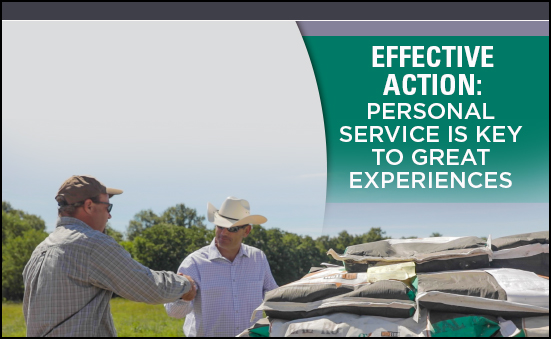
Effective Action: Personal Service is Key to Great Experiences

Great customer service can make you or break you. High-quality products are important, but even more important are the services offered by you, the dealer, to ensure when the customer is paying for his or her product, that customer is getting more than just a product that could have likely been purchased down the road from another business. Be sure to set your company up for success by distinguishing it as the company with great products and exceptional personal service.

In an era where many things are becoming automated, don’t let your service become one of them. Customers and prospective customers still want that face-to-face interaction – a smile, handshake and acknowledgement that a human with a heart is listening to and hearing their challenges while thinking of ways to help. There are several ways that you and your employees can differentiate your business by providing the best personal service possible. Here are four we highly encourage you try out.

  1. Listen. Yes, this seems so simple, yet sometimes we really don’t pay attention while the customer is speaking, and yet we think we have all the answers. On my recent flight home from the Cattlemen’s Convention, my flight was delayed. However, just one gate down, there was a flight to Bloomington that was on time. I asked the airline customer service agent if I could be rebooked onto that flight. He said that airport wasn’t close to my “home” airport and argued that he could rebook me to Wichita. Bloomington might not have been close to my original airport, but when you live in Western Illinois, you know your airport options, and it was a lot closer than Wichita, eight hours away. However, this agent wouldn’t listen to me. He only would look at his computer and offer to rebook me to a place that was not feasible.
  2. Use Names. Names are the most personal possession, and when we use a person’s name it shows we care. A recent study shows that our names are so important to us that hearing them triggers an entirely different part of our brain than any other words. And when we use our own names, that makes the relationship even more personal, like when making a phone call or sending an email or letter. Wouldn’t you rather get an email or note from “Joe” instead of “The Feed Store”?
  3. Know your customers. For most people this comes as second nature, but as you grow your customer base and get busier, don’t forget that customers are people. Asking about their family, their cow herd, and new horse they’ve purchased or even their pets will spur on conversation and show that you care about the person, not just the customer. And maybe you can’t remember the kids’ names, but you read an article about them in the local paper, ask how the kids are doing. That will be enough to make a proud parent’s visit.
  4. Respond quickly. Nobody likes to wait, or even worse be put on hold. Now, there is no way to get to everyone’s request the minute they make them, but do be cognizant of the time it takes you to respond to a customer. If they are on the other end of the phone, and you are looking for a product or a person to put them in touch with, suggest calling them back as soon as the answer or person is found. That way they are not wasting their time on hold, and you are not feeling rushed. Try to return phone calls and emails each day and be prepared when you do.

“Personal service” isn’t just a buzzword created to add to your already busy life. It is an important, valuable concept that can help you grow your business. Happy customers will tell their friends and peers about exceptional service; but they will tell everyone about poor service, something you don’t want to be the topic of!

Providing personal service isn’t hard. In fact, it is something most people do every day. Just remember, it can pay off by distinguishing your business and leading to growth.

3 Ways To Make Sure You Outperform You Competition

Differentiation is what sets your business apart from the four other farm stores, feed dealers and on-farm supplement suppliers in the tri-county area. But how can you set yourself apart in the marketplace? Just think about what makes it on your 10 o’clock news each night – besides politics and viruses. Stories that are unique, controversial or innovative find their way in front of the viewer audiences. Companies that offer unique or innovative products and services that leave customers something to talk about will attract business and create consumer awareness.

Differentiation is to your strategic advantage. Here are three ways to distinguish your business from your competitors.

Make Your Offer Compelling

Steve Jobs said, “Innovation distinguishes between a leader and a follower.”

Compelling companies are leaders. They are the talk of the town, and this buzz allows the business to gain momentum and grow sales. Now, you’re probably asking yourself what you can do in your particular industry to create buzz. That’s where your innovation and creativity get to thrive. Perhaps you offer a timely promotion for your customers once a year on a product that most everyone uses. Or, you could offer a customer appreciation incentive based on volume of business or number of new customer referrals. Providing education through a producer meeting or open house often sets your business apart, as people appreciate being kept in the know on new products, how to solve challenges in their businesses and learning of new services your business might offer.

Remember, making your business stand out starts with a good product, but also needs to be complemented with exceptional service. That’s why it is important to hire and train employees who are knowledgeable that can show their passion for what they do.

Climb the Reputation Ladder

“It takes many good deeds to build a good reputation, and only one bad one to lose it,” said Benjamin Franklin.

The words spoken by Mr. Franklin could not be truer, especially in a digital world, where one wrong move is recorded and can be shared globally via text message or social media with the click of a button. Being known as a reputable company that really cares about its people – both customers and employees – is the first rung in the ladder of trust. And, building trust is the foundation to any long-term relationship. According to inc.com, “creating a good business reputation means honoring a product-returns policy; delivering on time; providing timely and friendly service; publishing accurate ingredients, as well as keeping factual records; and ensuring that goods are safe for consumption.”

Earn Big with Premium Services and Products

The problem with offering products or services similar to everyone else is that it turns your company into a commodity business. Show your customers that you’re a value-added company by explaning how your products add value. It doesn’t take many testimonials or much math to show your potential customers the ROI on a premium product like VitaFerm® Concept•Aid®. Track your customers ordering habits and remind them when they are likely low on the products that they need for the particular season they are in. Offer delivery or stay open later for “after work” pick up. All of these things might seem small, but to the customer, they add a premium and a value, making you stand out from the competition.

Distinguish your business. It’s better to stand out from the crowd, especially when you are differentiating yourself in a positive light. Be unique. Be innovative and uphold the kind of reputation that will make your customers want to come back time and time again.

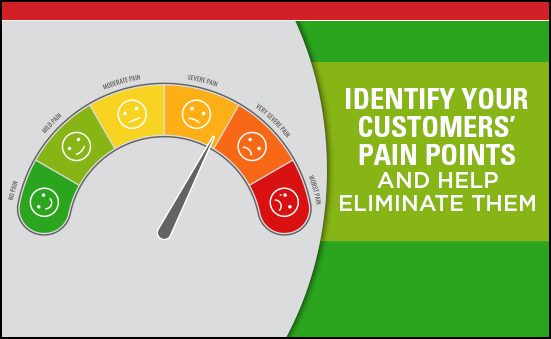
Identify Your Customers’ Pain Points and Help Eliminate Them

Physical pain is never good. However, for people in business, trying to make a living there is another pain that needs to be addressed. Did you know that in the world of marketing, your customers experience their own pain points? Although these pain points may not cause physical pain, they can still be challenging to “diagnose.” As a business owner or leader, you can distinguish your business by discovering pain points your customers have and providing a solution.

What is a pain point?

Pain points are specific problems that your prospective customer faces or simply put, challenges. Challenges come in a variety of forms and can be as different as your potential customer list. Some challenges can be prevented or eliminated due to proper management. Other challenges, like the environment cannot always be predicted, but can still be helped. Although a multitude of pain points exist, WordStream.com groups pain points into four broad categories and describes them as follows:

• Financial Pain Points: Your prospects are spending too much money on their current provider/solution/products and want to reduce their spending, or see a better ROI.

• Productivity Pain Points: Your prospects are wasting too much time using their current provider/solution/products or want to use their time more efficiently. With our audience this could be that they want to shorten their calving window or simply find a way to increase efficiencies.

• Process Pain Points: Your prospects want to improve internal processes. For our customer base, this could mean they want to treat fewer calves or they are looking for a more stress-free way to wean their calves and get them started on feed and water.

• Support Pain Points: Your prospects aren’t receiving the support they need at critical stages of the customer journey or sales process.

Once you start thinking about pain points in these four categories, you should be able to start to plan your positioning in a way that will address each of these pain points to show that your company is the best solution to their challenges.

How to Identify the Pain Points and Find a Solution

Now that you understand the four broad categories of pain points, how do you tell which pain point your potential customer is facing? Chances are, there are at least a couple of pains points that have your potential client reeling. So be ready to address their needs to set your business apart from the competition.

The best way to identify pain points is to have a one-on-one conversation with your prospects. Ask them directly what their challenges are and how you can help solve those challenges. Really listen to what they have to say before offering a solution. Although many prospects and customers will have similar pain points, everyone will have some variation on how they plan to manage to fix or solve those challenges.

Perhaps your customer is troubled with spending a large sum of money on a consumable product like mineral. This is a great time to have a conversation about the investment that customer or prospect will be making in the nutrition and overall health of an animal. Talk about the ROI for that customer, if he or she spends money on a product like VitaFerm® Concept•Aid®, and how that investment can produce more live calves, and therefore generate more income.

If the pain point involves support, you can offer numerous solutions based on the goods and services you offer while providing outstanding customer service. The personal services that back a product are sometimes just as important to the customer as the product itself.

We don’t want to see anyone in pain – physical or otherwise. By discovering your potential customers’ pain points early in your conversation, you can set your company apart by offering solutions to their challenges and helping to ease their “pain.” This should ultimately differentiate your business, and you can watch your business grow.