Letters From Lisa – December 2019

Christmas is coming, the goose is getting fat, who will stick a penny in the sweet blonde’s hat (figured it was worth a try)? This time of year, it’s easy to get wrapped up in the holiday hustle and bustle and spend the entire month of December running around like a crazy Kris Kringle. Add getting all your 2020 budgets and business planning done along with December’s tasks, and one can tend to forget the real reason for the season.

In short, the Messiah’s reasons should become our motivators always, but especially in the month of December. If we listen to John the Baptist carefully, we will hear that there’s never one reason that defines Jesus’ arrival. The Good News is more than just a headline. The Good News and the God who brings this message is everything between you and the infinite.

According to Simon Sinek (whose voice carries much weight as the third most-watched Ted Talk of all time with 46 million views), “the minute we’re born, we’re players in the infinite game, and that means we get one choice in life: how we want to play. We can choose to live our lives with a finite mindset, which means trying to get richer, more powerful than all of our friends, to get more, have more – but what is the point?

“Rather, we want to live a life of service, and that’s what we write on our tombstones – what we did for others. ‘Devoted mother,’ ‘loving husband,’ ‘she inspired us.’ To live an infinite life means to live our lives so that others may benefit from the work that we do – so we will literally live on forever, because we will look at ourselves and say, ‘I am who I am today partly because I carry with me the spirit of someone who’s no longer here, and I will pass their lessons on to my children and my colleagues and my friends.’ In an infinite-minded life, just like in business, trust is better, cooperation is better, ideas are stronger and remarkably those ideals live on beyond us. It’s a beautiful thing.”

Most days, it’s too easy to stay focused on our own lives – our work, our problems, what we have to accomplish and what is stressing us out. But it’s easy to forget that everyone else in the world has just as much on their plate as we do – sometimes even more. During the holiday season especially, it’s important to remember that every person you come in contact with has his or her own story and sometimes all it takes is a simple gift – a sturdy pair of shoes, a warm winter coat, a blanket, a cherry limeade or just a hug. These things may seem small, but they may be the gift that helps to get someone else up on their feet.

This year, after you’ve opened your gifts and shared a few laughs with family and friends, think back on the true meaning of the season and what Christmas means to you. As the always wise Doogie Howser, M.D. said, “Getting is good. Giving is better. Once you understand that, it’s always Christmas.”

Merry Christmas, from all of us here at BioZyme.
Dealer Spotlight: Gillespie Farms

Nathan Gillespie was looking for a more convenient source of the BioZyme® products to use on his family’s operation, Gillespie Farms. His brother suggested that he become a dealer so the products they had relied on for their farm would be right outside their back door. With a little convincing and after visiting with his Area Sales Manager at the time, Nathan decided to become a dealer, and in the three years since, he has grown his business substantially each year. He is also teaching his 16-year-old son, Morgan, about the business. The high school sophomore helps his dad with the warehouse when he can and has learned about the products at the same time.

Although Nathan says that he doesn’t spend many advertising dollars, he attributes his growth as a dealer to two key areas – a familiarity of the products from using them on his family’s farm and using the resources that BioZyme offers him.

“We try to use everything we sell in some aspect. It helps being able to talk about the products, especially the VitaFerm® Gain Smart® lines and the Vita Charge® Stress Tubs,” Nathan said. “We’ve had some tough sales to some people around here, trying to convince them that certain products work, if you give them more than 60 days. That’s been a challenge. People feed their mineral for 60 or 90 days while they get their cows bred, and then we don’t ever see them again until the next year when it’s time to breed again. I don’t know how it works for them, but it doesn’t work for us. That’s been the biggest challenge, convincing people they need to stick the course to see the true results.”

The Gillespie family has experience with most of the product lines, except Vitalize®, as they don’t have horses. However, they run purebred Hereford cows, and Nathan’s dad backgrounds calves. Nathan and his brother feed out freezer beef. He also raises Boer goats – both show wethers and commercial does.

In addition to believing in the products, which helps him spread the word to others in the area, Nathan is an advocate for the programs and services that the company offers its dealer network. He credits his relationship with his Area Salas Manager Ty McGuire for some of his new sales growth.

“Ty has taken me into some areas where I didn’t know many people and introduced me to some new customers. We can make sales calls together, which helps. We communicate 3-4 times a week, either by text or phone call. He is always available and willing to help out,” Nathan said.

The ties to his ASM have helped him meet people, but other programs have helped Nathan build his product knowledge. He completed the Master Dealer Training Program this spring and said that has helped him learn more in-depth about each product line, and how each might help specific customers with their needs. He also conducts producer meetings to introduce other producers in the area to the products, with the goal of starting more targeted meetings, perhaps one for feeders and one more focused on the cow-calf producer.

“Take time to know your customers,” Nathan advises. “Find out what their needs are and then suggest the right products for them so they will get the biggest bang for their bucks.”

Nathan Gillespie became a dealer to fulfill his needs of having a product he relies on readily available to him. In the meantime, he’s been helping others in his area meet their needs too. With continual growth, Nathan understands thinking like his customers and using all the resources available to him.

Take Action: Creative Thinking Helps You Grow and Earn

There are several traditional methods to grow your business. However, BioZyme® offers support to its dealer network for its marketing and outreach efforts and rewards dealers enrolled in the Dealer Rewards Program for their creativity and their efforts.

Area Sales Managers, the Outreach Support Center and the Marketing Team are all available to assist dealers in their marketing and promotion efforts. Brainstorming with these groups will help you find some creative and unique ways to grow your business. You will also find resources that are readily available for your use, like online posts using Promoboxx or mailers and print advertisements.

Some of the most inventive methods of promotion are the results of creative thinking on behalf of a dealer and his or her ASM. Digital billboards, signage at local livestock auctions and targeted producer meetings focused on specific audiences are all some “out of the box” methods to help promote your business.

Year-end Planning

As the end of the year approaches, you will want to think about ways to spur end-of-the-year sales and thank your customers. This might be with a customer open house, a newsletter to talk about calving preparedness or a producer meeting to talk about products. Remember planning these in advance is always a good idea, and the BioZyme staff is available to help.

In addition to growing your business, you can also earn dealer reward points. Dealer Reward points were created to motivate and reward dealers for their participation and efforts to educate and market the BioZyme products. Points can be accumulated through the year for many of the tasks already mentioned. They can also be earned for completing the Master Dealer Training Program, going on a sales call with your ASM, after-hours dealer trainings and much more. Once you have participated in an activity, work with the staff to make sure your points get calculated.

Use the information in the Online Dealer Center to see a complete list of activities that can earn reward points. But, don’t be afraid to propose an idea that isn’t on the list. We always love to hear your original ideas and get especially excited to share them with other dealers. Those new ideas will earn you points as well.

Once you have points, you can redeem them for a variety of items, from caps and jackets representing the various product lines to gift cards, an iPad and even a show box. Points accumulate during the year and need to be redeemed by Jan. 31 the following year or they are wiped out. The rewards make great gifts for customers, employees and even nice swag to keep for yourself to wear with pride as you promote your business.

Get creative with your promotion. Brainstorm with your staff, family members and the BioZyme team that is here to help you. Take action. Earn rewards. Watch your business grow

Thinking Like Your Customer Helps Build Business

As the year winds down and you’re examining those sales figures, trying to decide how to best get over the hump and build some new business to reach your goals, one thing should come to mind: treat your potential customers like you would want to be treated. In other words, gone are the days of the hard-sell, and here are the days of thinking like your customer would think to solve their challenges.

John Jeffrey, BioZyme® Area Sales Manager (ASM) for Oklahoma and Eastern Kansas, said there are three points to consider when talking to potential customers and trying to develop new accounts. Thinking like a customer is key so you know what his or her challenges are and how the products can help, but first, you must build a relationship with the potential customer.

Perhaps statesman Abraham Lincoln would have been a great sales trainer back in his day. He once said, “When I get ready to talk to people, I spend two thirds of the time thinking what they want to hear and one third thinking about what I want to say.”

Potential customers are just like you. They value their time, want to have a relationship built on trust and understanding, and appreciate the follow-up that isn’t too bothersome. Put yourself in their shoes to start developing business.

  1. Identify a need. Jeffrey said when a producer approaches him at a trade show, meeting or even calls him on the phone, the first thing he does is visit with the person to discover the gap in his or her program. This is the foundation for a relationship built on trust and further understanding their needs. Ask the questions: What are your goals? Are you meeting them? If not, what is missing? Discovering the challenge will help put you in that producer’s shoes and understand further what the frustrations are and what supplement can potentially fill the gap.
    “You won’t get anywhere if you just start providing them with a lot of information. First, you’ve got to make them realize they have a challenge and that they need something to fix that challenge,” Jeffrey said.
  2. Consider their time. Jeffrey reminds all salespeople, that nobody owes you time, so make the most of their time when you are visiting with potential and current customers. One way to make the most of your time and theirs is to leave your phone in the car. The one exception is if you are expecting a very important call, such as receiving word on a family emergency, and then, silence your phone and explain to your client before your meeting that the only way you will take a call is if it is of the upmost urgency and that you are expecting that type of call.
  3. Follow up. “Persistence pays, but don’t be annoying,” Jeffrey said.
    He said he likes to follow up with potential customers, and though he doesn’t have a set schedule, he does like to be persistent and available to answer further questions, especially in today’s competitive mineral market. Once again, he puts himself in his customers’ shoes, and thinks about how often he’d want the follow up or how he’d want his questions answered and makes sure he is available to answer questions.

Perhaps statesman Abraham Lincoln would have been a great sales trainer back in his day. He once said, “When I get ready to talk to people, I spend two thirds of the time thinking what they want to hear and one third thinking about what I want to say.”

Potential customers are just like you. They value their time, want to have a relationship built on trust and understanding, and appreciate the follow-up that isn’t too bothersome. Put yourself in their shoes to start developing business.

Critical Thinking Can Grow Your Business

Meetings can be one of the best ways to work collaboratively to help grow your business and work ON your business, if you structure them correctly, involve the right people and ask the right questions. As Lisa referred to in this month’s letter, the best way to advance your business is in the dining room, looking toward the future, and not necessarily dwelling on the past.

Another way to look at working ON your business is through critical thinking sessions or brainstorming meetings. According to the website, www.barefootbrainstorming.com, there are several ways to make your next strategic planning session productive and move your business forward.

  1. Have an agenda. Have a list of goals that you want to accomplish during the set time of the meeting. The agenda shouldn’t be too specific, but the end results should answer the questions of who will be responsible for achieving the assigned duties or tasks.
  2. Value time. Make sure you have a start time and end time and keep track of time throughout the meeting. Time is a valuable asset, and if the participants know the meeting will start and end on time, with plenty of short breaks to check email and return calls, they will be more focused during the actual meeting time.
  3. Put away the PowerPoint. Nothing is more boring than seeing a screen of numbers and charts flash before the attendees’ eyes, only for a brief amount of time. And, the focus is drawn away from what is being discussed and rather diverted onto copying the numbers onto a notebook. Instead, print out notes, provide colorful pens, markers and colored pencils for notetaking, as the colors are soothing, and help promote creative thinking.
  4. Play. Some of the most productive meetings will include small toys or gadgets to engage all five of the senses because according to one blog site, “when we engage both our left and right hands simultaneously, we use 80% of our brain power!” The blog recommends the following for each of the senses:
    • Sight – colorful toys, pictures, and crayons.
    • Smell – Play-Doh, and Mr. Sketch scented markers.
    • Touch – tactile toys (slinkies, legos, pipe cleaners, and Play-Doh).
    • Sound – music.• Taste – candy bags including chocolate, caramels and gummy bears.
  5. Encourage participant engagement. Invite people from various teams or departments to the meeting for a fresh perspective, but let your expectations be known. Everyone should participate. And, every idea has some merit, even ones that seem a little far-fetched, can be responded to like this, “yes, and then…” building on an idea to get a different, but positive outcome in the future.
  6. Assign a recorder for all ideas. Every idea has some good merit, and it is important to keep those ideas flowing. Assign one or two people to write the ides on a big poster so everyone can see them, and when it is time to start critiquing ideas, start with positive feedback first.

Meetings can be productive, and they can be a way to start planning for growth in the future. Critical thinking is a tool that allows various perspectives to be shared, while hearing fresh ideas from different team members. Pull up a chair, make room for creativity and start planning the steps to grow your business.

Letters From Lisa – November 2019

Last month we talked about working on your business instead of in it. We are going to continue that discussion by focusing on some thought processes that might help you stay focused on just that.

The ways we think about past experiences can help or hinder the development of insight that makes working on the business more difficult than it is just by its nature. When we make decisions based on habits of the past, we lose out on some of the great changes possible in our lives. Working on the business means not forgetting the past but leaving it in the kitchen while sitting at the dining room table.

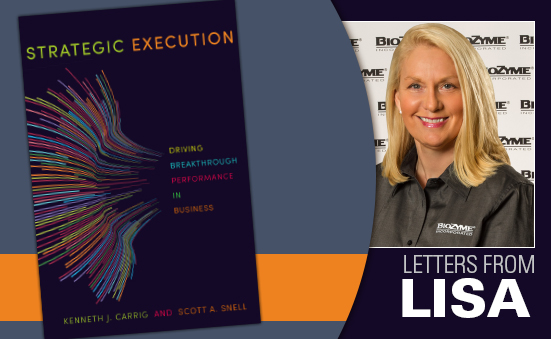
Working on the business should allow one to achieve performance breakthroughs, or in other words, create impact in the areas that drive the improvement we all desire. I like to use the term A to the 4th power (A4) to help me stay true to working on instead of in business. The four terms come from Scott Snell and Ken Carrig’s forthcoming book, “Strategic Execution: Driving Breakthrough Performance in Business”, and are Alignment, Ability, Architecture and Agility.

ALIGNMENT

Alignment conveys the deceptively simple notion that execution depends on everyone working together toward the same goal. Alignment is the “sine qua non” of execution; without it, nothing else much matters.

It provides clarity of purpose and direction, momentum to overcome inertia, a focus for decisions and actions, and resilience in the face of change or disruption.

Today, misalignment has become the norm, not the exception. There’s often a substantial gap between understanding the requirements of strategy and each person’s work. Disengagement can create this misalignment, which unfortunately leads right into working all day in the business instead of on it.

It is, therefore, a constant challenge to emphasize the mission-critical elements that unite the organization toward its strategic purpose and work to achieve those outcomes. An important part of alignment is clarifying with others how work that they are accountable for leads to those strategic outcomes, or in other words, how overall success is attributable to them.

ABILITY

In any endeavor, whether it’s business or sports, great execution requires great skill.

Usually, what begins with a discussion of alignment often evolves to a deeper discussion of ability. This isn’t just a focus on productivity, but on attracting and developing; raising skill levels; all while keeping aligned accountability.

ARCHITECTURE

The design of your organization, as well as its underlying infrastructure, processes, technologies and controls constitutes the domain of organizational architecture. Your organization’s design makes a big difference in terms of reliability, alignment and continuity of performance.

In terms of working on the business, ensuring a valid organizational architecture is critical for resource flows, information availability, decision-making and processes that propel the organization forward.

Try to focus on ways to streamline your organization’s architecture, simplify structures, improve processes, and clarify roles, responsibilities, accountability and communication flow. This includes building connections and opportunities (meetings AND one-on-one conversations) to improve joint decision-making.

AGILITY

The ability to respond and adapt is critical for achieving organizational goals. Ironically, one of the most common inhibitors of agility is our approach to execution. In an attempt to drive better performance and maximize efficiency, many organizations create a situation in which change is difficult. The harder they work in the business instead of on it, the more challenging it is for them to see the need for change, or to flex, adapt and adjust appropriately. People hate change, but in reality, if you are not constantly changing you are not working on your business but in it.

There’s a great book (see picture) that summarizes these concepts way better than I have. Take the time to read it and then get to work ON your business at the dining room table, not in the kitchen.

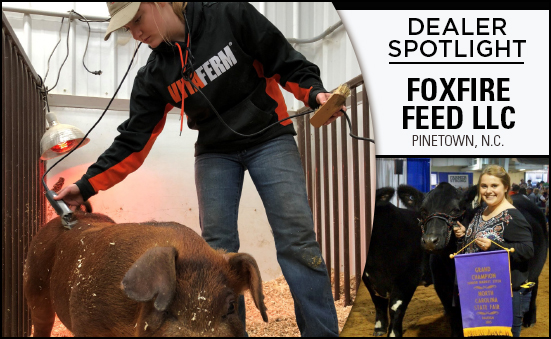
Dealer Spotlight: Foxfire Feed, LLC

Balancing their Business is a Labor of Love

When you can whole-heartedly see the results of a product and can believe in that product and the company that makes it, it is easy to say “yes” to becoming a dealer, even if it means balancing that with full-time careers and a herd of cattle.

That’s exactly what the mother-daughter duo at Foxfire Feed LLC, Pinetown, N.C., has done, but they wouldn’t have it any other way. Mother, Sandra Boyd, works as a secretary for their 5,000-acre row crop farming operation; her oldest daughter, Melinda, is an agronomist, and her youngest daughter and resident-showman, Madison, is away at school at Oklahoma State University. Together, they all work to promote and market feed and mineral and manage the cow herd.

“We just do this on the side, on the weekends, in the afternoons, whenever we get a chance, It’s a fun ‘little hobby’,” Melinda chuckles.

Their little hobby of being BioZyme® dealers started about four years ago. They are dealers for Roy Umbarger & Sons Show Feed and had been purchasing the Sure Champ® products from Umbarger for their own use and having great results with them. Once they started using the products, they were eager to start selling the products. The rest is, as they say, history.

“That worked out really well for us, and now we are selling more than we ever imagined! We just really trusted the products that we purchased, and we wanted to share them with everyone in our area. We first were using the Vita Charge® Cattle Drench and the Sure Champ Cattle.” Melinda said.

She adds that the products speak for themselves, and their success combined with that of their customers has been the best marketing tool that Foxfire Feed has used. She said when they travel to shows, people will often ask them what they do to keep their cattle looking so good.

“We don’t tell them all of our secrets, but we do tell them about the BioZyme products. The Sure Champ keeps them on feed, the green cattle drench, Vita Charge, is really a miracle worker when they do go off feed or are in stressful situations. We use the drench before every show, and we use Vita Charge Climate Control before every show because the heat and humidity are really big factors here in Eastern North Carolina. People notice our livestock and our customers’ livestock. They like what they see, and they buy it from us,” Melinda said.

Not only are they involved in showing their own livestock, but the Boyd family also provides sponsorship to some of the shows in the state. Melinda said the show industry is rapidly growing in Eastern North Carolina. Providing sponsorship to some of the shows not only puts the Foxfire Feed name out there, but it lets their customers know that they believe in them, as much as they believe in the products that the Boyds sell.

She does suggest that anyone that is interested in being a dealer should use the products first, as it helped her family have a greater understanding of how and why they work. However, if that isn’t always possible, she said the resources that BioZyme offers the dealers make being a dealer easy, especially with a busy schedule.

She said the Master Dealer Training Program is great at further explaining products, and the entire staff has been willing to help their dealership during their busy times. Their ASM Justin O’Flaherty always is willing to help them when they have a question.

“The whole company is very helpful if we need something. And with the time management that we have to figure out, it is a juggling act for all of us, that’s for sure,” Melinda said.

Being an outstanding BioZyme dealer is one thing that the Boyds of Foxfire Feed have definitely figured out. They give back to those who trust and use their products and rely on the many resources offered to the dealer network. They are passionate about the products and excited to share them with others. They truly are dealers that exemplify “care that comes full circle.”

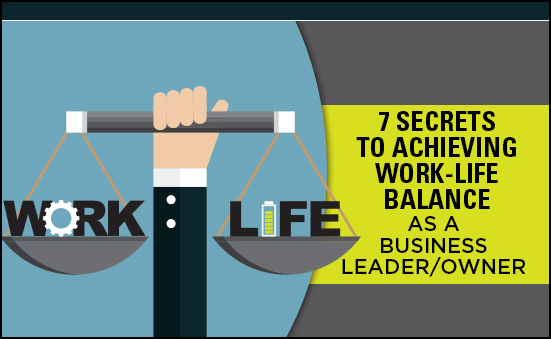
7 Secrets to Achieving Work-Life Balance as a Business Leader/Owner

As business owners and leaders in a world of connectivity it is often challenging to have a separation between work and personal life, especially when you are involved in agriculture. Your customers are likely your friends, neighbors and maybe even your relatives. Smart phones and tablets keep you connected to everyone, starting first thing in the morning until late at night. Combine all that with the last-minute needs of many people, and it truly is hard to balance personal and professional lives.

However, everyone does need some type of a break. No one performs to their highest during a season of burnout, and if you are not performing to your best potential, your sales will show. Perhaps instead of a balance, you need to decide the best way to “give-and-take” the time you need to grow your business, while still enjoying life. For instance, a start-up, young business will probably need to work harder, putting forth more effort than a well-established, highly respected company. That is part of the give-and-take or balance of being a business owner or leader.

Megan Sullivan offers seven tips on achieving some type of balance in your work and personal lives.

Set Boundaries and Keep Them. This is critical to your personal wellbeing in many different aspects. Be sure to set a time boundary. If you are typically open from 8 – 5, daily, it is acceptable to answer the phone a little early or even make a delivery. But much later than 5:30 or so, you need to call it quitting time and put up the phone and spend time doing something you enjoy.

When it comes to space boundaries, these are just as important as time boundaries. Make sure you have a space where you can leave work behind, like an office, shed or even in your pickup. Just make sure when you get you home, you don’t bring work with you.

Take Time Off. If you say you’re taking time off or time away, mean it. This is especially true on days you are sick or have medical appointments. If you have let your customers know you are going to be out, they will respect that, and not contact you.

Keep your Social Commitments. You remember what they said about all work and no play? It made Jack a dull boy. And it will make you a dull human being too. Not only are social opportunities a good way to keep up with your friends and what is happening in your community, they are also another way to promote you and your company (remember, life is all about balance).

Take Care of Yourself. Self-care is so important to being able to function properly. Be sure you eat healthy meals and snacks and take breaks throughout the day. If you are at a desk the majority of the day, get up and stretch. Walk around and get some fresh air every few hours. If you are outside in the elements most of the day, be sure to stay hydrated and take breaks when you can.

Part of taking care of yourself is also rejuvenating away from work. Take a vacation. Maybe you can’t afford the time or money for an elaborate trip. But, take time away. Take a long weekend away with your family. Go visit family or friends. Explore some part of the state or country you’ve always wanted to visit. There are several ways to get away and not spend a great deal of money, and ultimately, you will feel better for it.

Set your Own Norms. Remember, what works for your neighbor might not work for you. For instance, you know you have church on Wednesday nights. Make that a night that is set aside for family. It might be a family policy that everyone eats together either before or after church, and no cell phones are allowed. If the other stores in town are open late one night a week, you can choose to stay open or not. It is up to you to set your schedule and what works best for you.

Ask for Help. You don’t wear a cape, and you don’t have to be a superhero. Sometimes you can be more efficient if you ask for help. Or better yet, delegate some responsibility to other employees. Asking for help and delegating are ways that you can get more time back on your calendar or accomplish a task quicker with the help of others.

Know When to Say No. We live in a society of people pleasers and saying “no” to others is hard. But sometimes it is the best thing to do for your own sanity. Weigh the pros and cons. Is it worthwhile to you, your family or your business to say yes? If not, a firm no is always better than giving the asker the false hope of a “maybe.”

Work-life balance isn’t a myth. But it isn’t easy either. It takes some planning and time to achieve, but with the advice of these tips above, you can still grow your business while having a happy, healthy personal life too.

Online source for this story: https://quickbooks.intuit.com/r/ productivity/12secrets-to-achieving-a-good-work-life-balance-as-a-businessowner/

Bringing Balance by Investing in Youth

Getting involved. Giving back. Sharing a passion and her knowledge. These are all actions that have helped Riley Faris, Pueblo, Colo., get her business going during her first summer as a BioZyme® dealer.

Faris, who was involved in youth livestock projects growing up, has stepped up as a volunteer the past three years at the Pueblo County Fair in Southeast Colorado. She showed at this same fair as an exhibitor, and now enjoys coming back as a volunteer, assisting the swine superintendent with the hog show including duties ranging from weighing in the pigs, to breaking classes to helping manage the show on show day.

“I’m trying to help the youth with showing and to learn how to take care of their animals. Coming from an agricultural background, it is important to instill in the youth the importance of agriculture and the role it plays in our everyday life. Plus, when I was growing up, I had a lot of people help me, so now that I’m older I want to return that to the younger kids,” Faris said.

Faris is not only helping youth understand the importance of agriculture and assisting with the annual hog show, but she is also trying to teach the young exhibitors and their parents the importance of keeping their animals healthy with the use of a good nutrition program. As a newer BioZyme dealer, she takes the opportunities of being at the Pueblo County Fair and other surrounding livestock shows to discuss the Sure Champ® line of products and the Amaferm® advantage.

At this year’s Pueblo County Fair, Faris was able to sponsor showmanship awards for the Grand and Reserve Champion showman of each species, while promoting the products that help their livestock stay on feed and water and keep healthy.

“This year because of BioZyme and all of the support they offer, I was able to get showmanship banners for hogs, sheep, goats and beef.

I am also giving each of the winners a little goodie bag with some additional fun things and added information about the Sure Champ line, specifically designed for show animals,” she said. “The kids were so excited. Typically, the grand and reserve champion animals get banners, but they have to give them to the buyers, so the kids were excited they got to bring their showmanship banners home with them.”

In addition to the awards she provided at Pueblo County, she sponsored awards for the Grand and Reserve Grand Market Animal classes at the neighboring Otero County to Fair. Both sponsorships led to product awareness, and with the county fair and state fair about a month a part in Pueblo, she said she sold some additional Sure Champ between the county fairs and the Colorado State Fair.

“The most rewarding part is watching the new kids that come up through the programs or the kids that reach out to me and watching them succeed and seeing the look on their faces when they know they have accomplished something,” Faris said.

Although Faris genuinely enjoys watching the youth grow, learn and succeed, she knows that being involved in the local shows has created awareness for her business, and helped increase her sales.

“Give a little bit of yourself and your time, and people will start supporting your business,” she said.

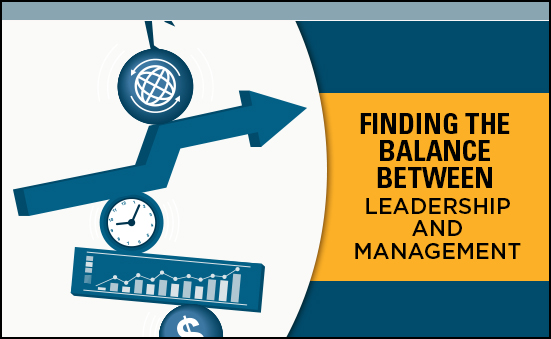
Finding the Balance Between Leadership and Management

When it comes to running your business, would you rather have a leader or manager in charge? Seems like a trick question until you really think about it. However, it is best to have someone who can balance both the traits of a leader and a manager and work in the business while also working on the growth of the business.

A leader guides or directs. We often think of leaders setting behind large mahogany desks in big cushy chairs. They set budgets, give inspirational talks at the company’s monthly meetings and cheer on the employees who have reached milestones. Everyone wants to be an all-powerful leader.

A manager on the other hand, sets among the employees in a not so cushy chair, and lives by the budgets set forth for them. They often oversee one team or division of the company, and make sure that tasks are assigned and completed on time, team goals are met. Managing can sound dreary and sometimes like the controlling force behind the worker bees.

However, both leaders and managers are needed in successful business settings. Are you a leader or a manager? The problem with this either-or thinking is that both are needed in a well-run enterprise.

According to a post at www.inpserity.com: “Leaders focus on high-level objectives such as inspiring and motivating the team to success, which can be exciting and powerful. Managers focus on organizing, planning and overseeing daily operations and that can sound mundane.”

You might be thinking back to Lisa’s letter, and wondering, in your position, should you be working in the business or on the business. The answer is, both.

A well-balanced supervisor, regardless of title, will have some traits of both a leader and a manager. Although a manager’s first priority is to make sure employees get their job complete in an efficient order – working in the business; it is also important to the employees to hear from their manager positive feedback on how they accomplished the task – working on the business. That is a good example of how a supervisor needs to balance the roles of both manager and leader.

Here are six questions for you to ask yourself, according to Insperity. com, to help you balance your manager-leader role to make your employees and your business more efficient.

1. Is the work getting done well without my intervention? If yes, concentrate on motivating the team to keep performing well. If not, put on your manager hat and ask the team what’s getting in the way of better performance, then help them implement changes.

2. Do you focus on results or the process (how the job got done)? If you focus on results, good for you. That’s what is most important. If you tend to focus on process more than results, challenge yourself to become more comfortable with the reality that many alternatives may exist to getting the same result.

3. Do colleagues in other parts of the organization come to you for advice? If yes, you’re probably seen as a leader. If not, look at what you can change to support and inspire others. What do you spend the most time talking about? The tasks at hand, processes and deadlines, or the big picture and strategy? Managers need to discuss both but pay attention to whether you’re leaning too hard one direction or the other.

4. What do you spend the most time talking about? The tasks at hand, processes and deadlines, or the big picture and strategy? Managers need to discuss both but pay attention to whether you’re leaning too hard one direction or the other.

5. Do you ask employees to accomplish objectives without explaining the need behind the request? Employees are more likely to go the extra mile if they understand why they’re being asked to do something.

6. Who is responsible when things go wrong? Do you blame the team or yourself? A leader understands that it’s ultimately his or her responsibility for the success or failure of a team.

Remember, there is no one right to lead or manage your team, but you will need to balance your skills so that you can encourage them to get the work done while also serving as a coach and motivator. Being a manager and a leader at the same time will allow you to work in and on the business, achieving the best results for everyone.


Information from this article from: https://www.insperity.com/blog/leadershipvs-management-strike-right-balance-business/